You are packing for three nights away, yet the jewellery case looks prepared for a month. A travel organiser can encourage overpacking if you start by filling its compartments. Reverse the order: choose the pieces for your planned outfits, then find the smallest case that accommodates them safely.
A weekend trip might need one everyday pair of earrings, a second pair for dinner and one necklace. The right quantity depends on your plans. A case cannot remove the consequences of losing a sentimental piece, so decide what you are comfortable taking first.
Choose separation over compartment count
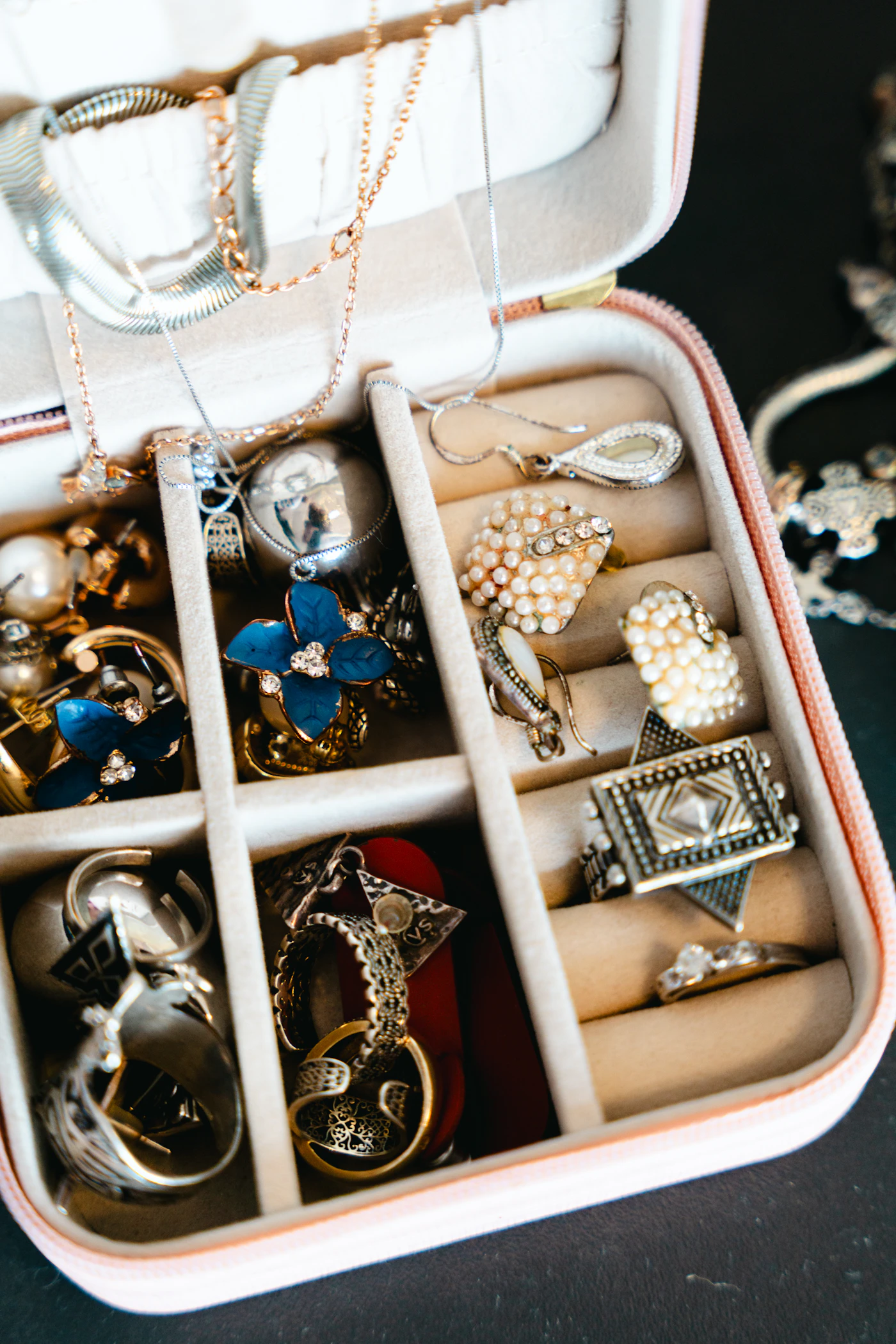
Open a candidate case and picture each of your selected items inside. Do the necklace pockets keep chains apart? Is there room for the pendant? Can a bracelet sit without being forced into a curve? A large number of compartments is useful only if they fit your pieces.
Check whether dividers remain in position when the case closes. A decorative lid may look spacious while leaving little usable depth. Product measurements and a photograph of the empty interior often reveal more than an image styled with very small jewellery.
Balance structure and flexibility
A structured case can help keep its shape inside a bag, while a soft roll may fit more easily around other items. Neither is automatically appropriate for every collection. Consider the rigidity of your pieces and whether pressure from neighbouring luggage could reach them.
Do not force a cuff, fine chain or elaborate earring into a slot designed for something else. Separate pouches may be a useful supplement, provided the complete arrangement still stays secure. Test the packed layout at home before the morning you leave.
Think about opening the case on the trip
Imagine using it on a small hotel shelf. Does it need a large flat surface? Will loose pieces slide out when you unzip it? Can you see the pair you want without emptying the whole case? Convenience at the destination matters as much as fitting it into a suitcase.
Keep a small inventory for your own use, perhaps a photograph taken before closing the case. Review your storage options at the destination and any relevant insurance terms for valuable items. A travel pouch is an organiser, not a guarantee against theft or loss.
Give the return journey a routine
Pack the same selection together before checking out rather than collecting jewellery from several surfaces at the last minute. Check the bedside area, bathroom and dressing space while there is still time to look carefully.
Once home, return the items to their usual storage and set aside anything that needs attention. An empty, ready case is easier to pack for the next trip. If you repeatedly bring half its contents home unworn, reduce the selection before buying a larger organiser.
Find your best fit
| Consider | Best for | The tradeoff |
|---|---|---|
| A compact structured case | A small selection that needs an organised layout | Adds a fixed shape to the bag |
| A soft jewellery roll | Flexible packing around suitable pieces | May offer less protection from external pressure |
| Separate labelled pouches | An unusually shaped or very small selection | Needs a consistent way to keep them together |
A more considered purchase
- Choose the jewellery before the case.
- Compare the interior dimensions with your pieces.
- Check that contents stay separated when closed.
- Make an arrival and departure storage habit.
Your questions, considered
Should I take my entire everyday collection?+
Pack for the outfits and activities you expect, with only the alternatives you genuinely want. Leaving difficult-to-replace items at home may make the trip more relaxed.
Does a travel case replace normal storage?+
It can hold a small collection temporarily, but assess it against each piece’s long-term storage needs. The best compact layout for travel may not be ideal for daily access at home.
The takeaway
Choose a case that makes a small selection easy to manage. Fit, separation and a clear packing routine are more useful than extra slots you feel obliged to fill.