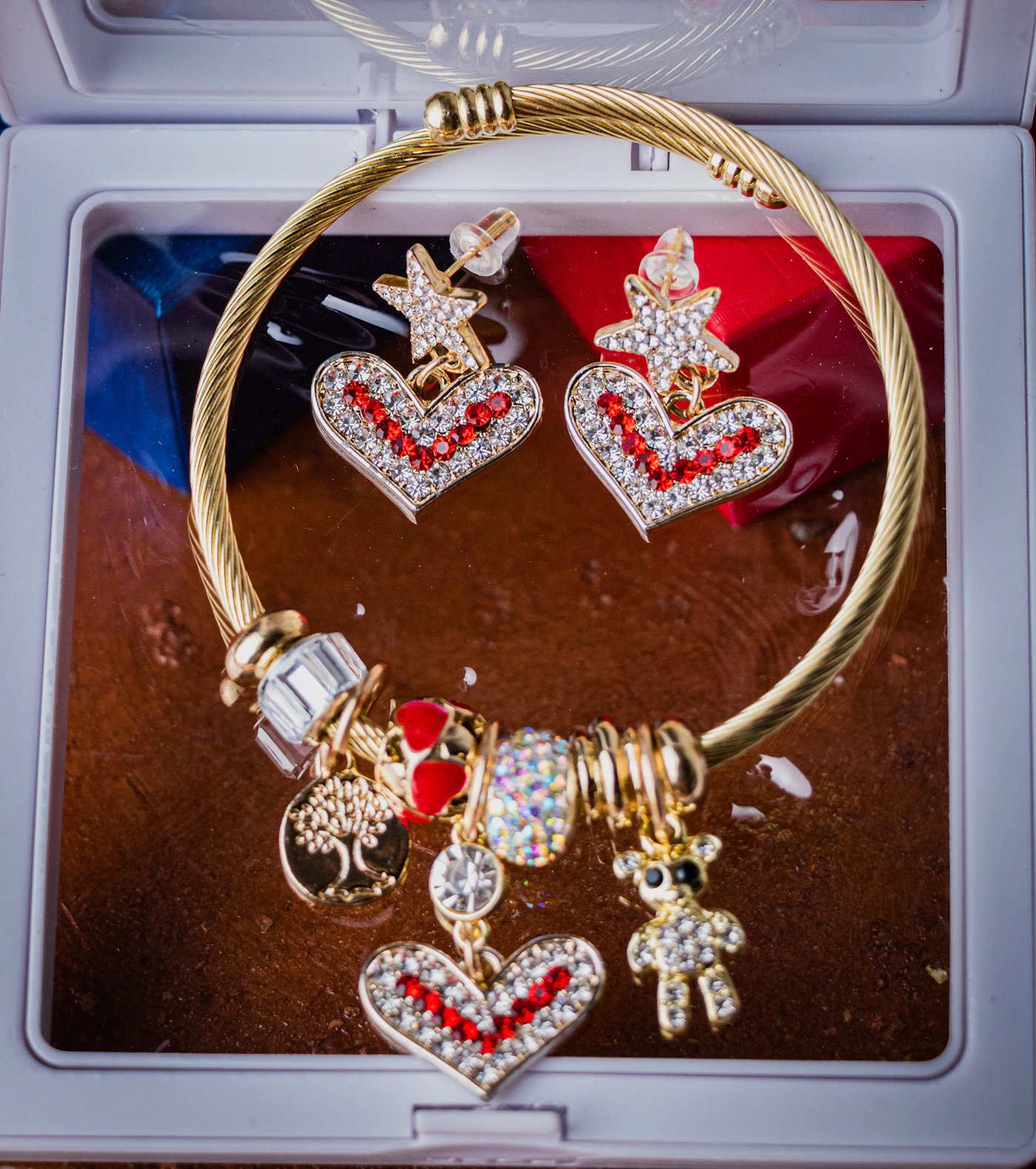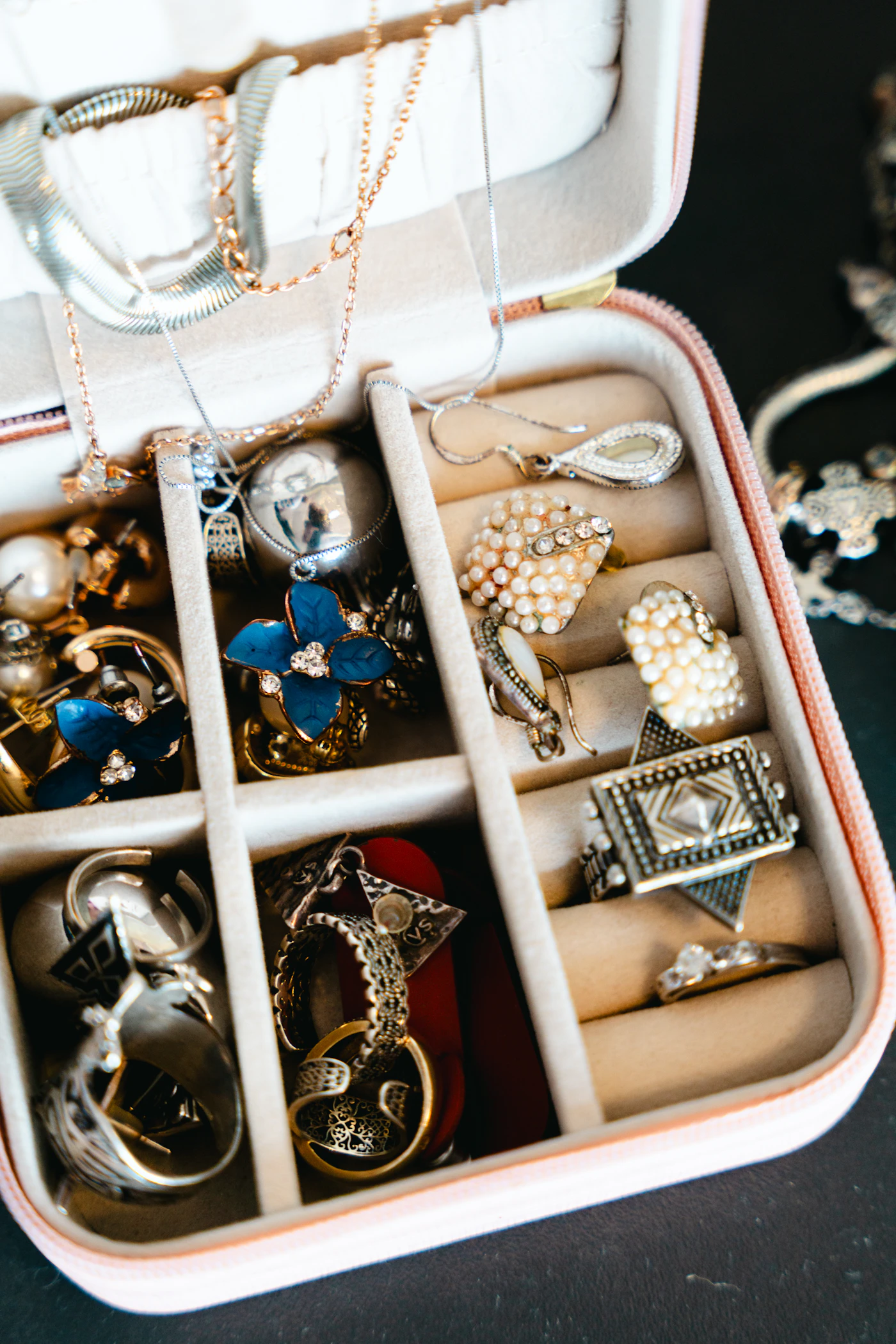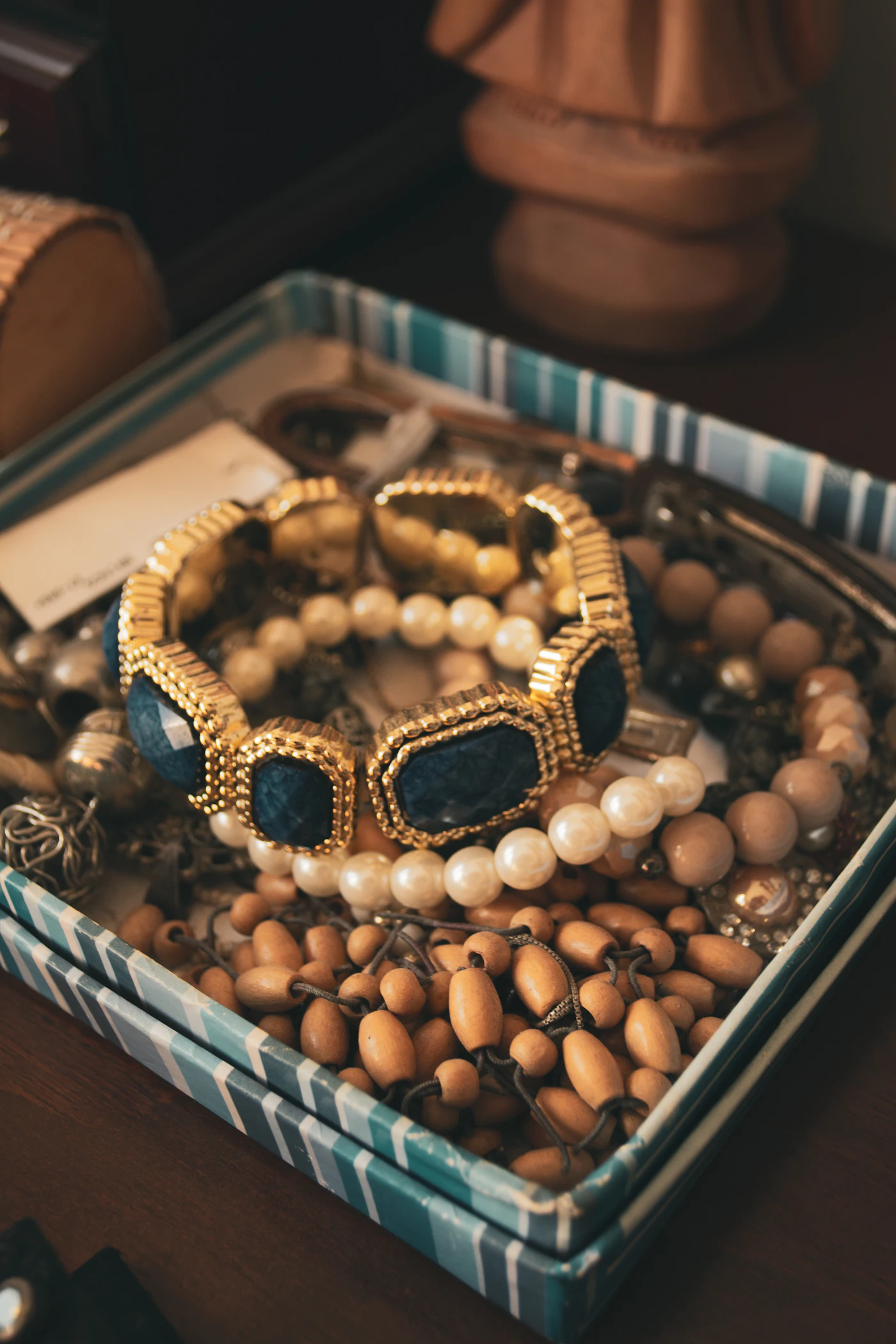
A favourite ring looks dull after a busy week. You could reach for the cleaning solution under the sink, but first ask what you are trying to clean. A surface deposit, a changed finish and a loose setting are different problems, even if they all make a piece look less fresh.
Good care begins with a pause. Put the jewellery on a soft, clear surface and gather the product information you already have. If you cannot identify the construction, choose an assessment over an experiment.
What is the complete piece made from?
Look beyond the main metal. A ring may combine a coating, a stone, a decorative finish and a setting. Earrings can include glued details. A cleaning instruction that suits one component may be unsuitable for another, so use the maker’s advice for the exact design.
For inherited or second-hand jewellery without documentation, explain that uncertainty to a jeweller. Do not guess the stone or material from a photograph. Identification can be a separate service from cleaning, and it is reasonable to ask what the assessment will involve before leaving the item.
Is anything loose, worn or damaged?
Inspect gently without pulling or flexing parts. Notice a clasp that no longer closes in the usual way, a bent post or a setting that catches on clothing. These are reasons to pause wearing the piece and seek advice, not invitations to tighten it with household tools.
Write down what you noticed and when. A short description helps the jeweller understand the issue and gives you a useful record. If you have a warranty or service arrangement, check who is authorised to carry out work before choosing a repairer.
Does the method suit every component?
GIA warns that not all gemstones and jewellery are suitable for ultrasonic cleaning. A device sold for jewellery is not universal permission to place your whole collection inside. Follow piece-specific instructions and ask about stones, treatments and settings when considering a machine.
Keep abrasive products and improvised chemical mixtures out of the decision unless a qualified source has confirmed their suitability for the exact item. More force or a longer soak is not automatically a better clean. Avoid treating a deliberate dark or matte finish as dirt to be removed.
Can you make the process calmer?
Prepare the work area before removing the jewellery. Close nearby drains, clear away unrelated objects and work with one item at a time. Keep any permitted supplies within reach so that the piece does not end up balanced on an edge while you search for a cloth.
After a professional clean, ask for a practical home-care explanation and record it. The best future routine may be very simple. Buying a comprehensive kit makes sense only if the included products are appropriate for what you own; unused bottles do not make a collection better cared for.
Find your best fit
| Consider | Best for | The tradeoff |
|---|---|---|
| Follow the maker’s instructions | A known piece with clear documentation | Instructions may differ across your collection |
| Ask for an assessment | Unknown materials, sentimental items or damage | May require a quote before cleaning begins |
| Buy a cleaning kit | A confirmed method for specific pieces | A broad marketing label is not enough |
A more considered purchase
- Identify metals, coatings, stones and decorative finishes.
- Check for loose or damaged components.
- Confirm the method for the whole construction.
- Prepare a secure surface away from open drains.
Your questions, considered
Can I clean every piece on the same afternoon?+
You can organise them together, but separate them by their actual care needs. Do not use one method simply because it is convenient for the largest group.
What if the jewellery still looks different after cleaning?+
A change in finish may not be removable dirt. Stop repeating the treatment and ask the maker or a jeweller to assess what you are seeing.
The takeaway
Identify first, inspect second and clean only with suitable instructions. A slower decision is worthwhile when it protects a piece you would be sorry to lose or alter.
Further reading & sources
Material and care references checked September 7, 2026. Styling recommendations reflect our editorial judgment.