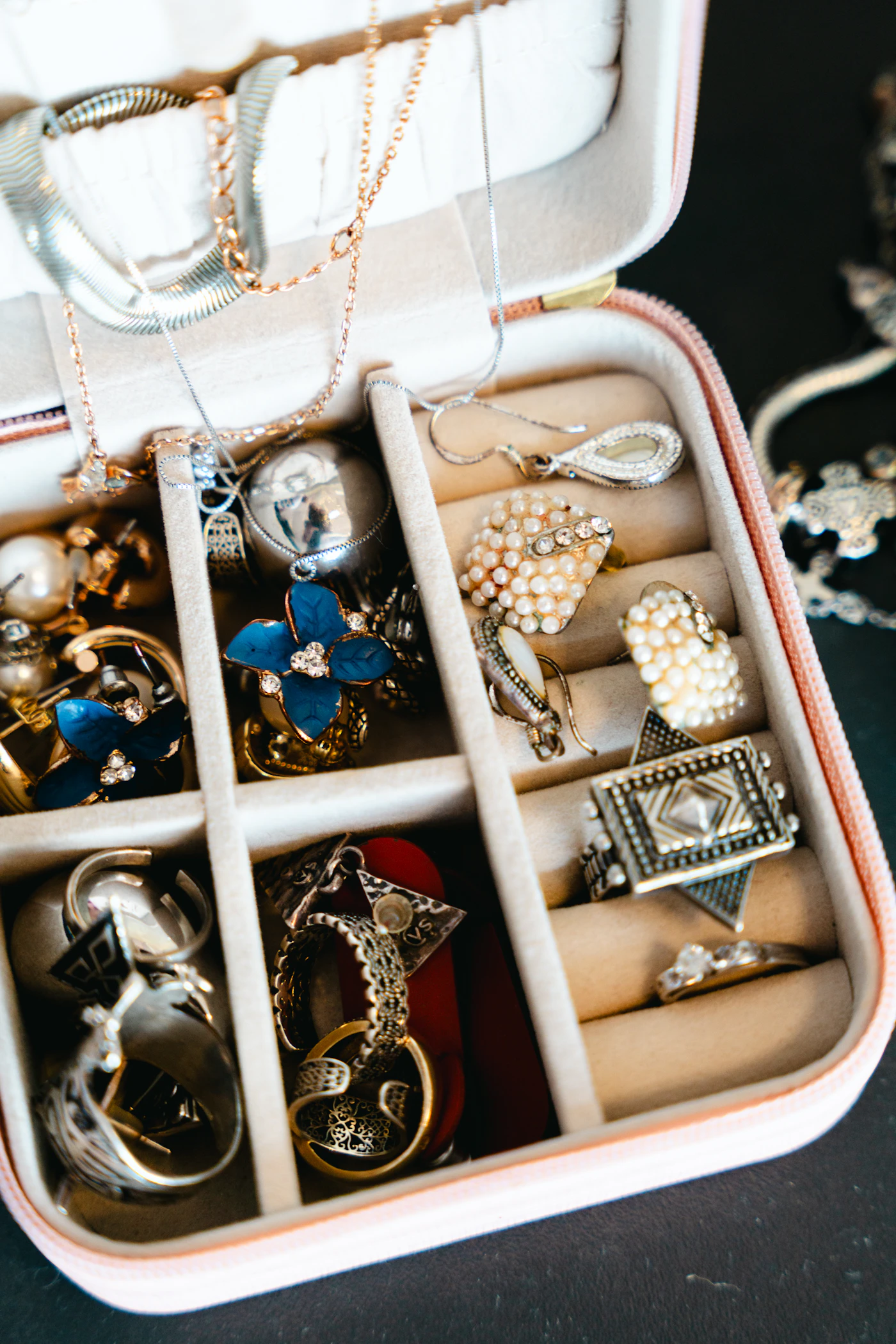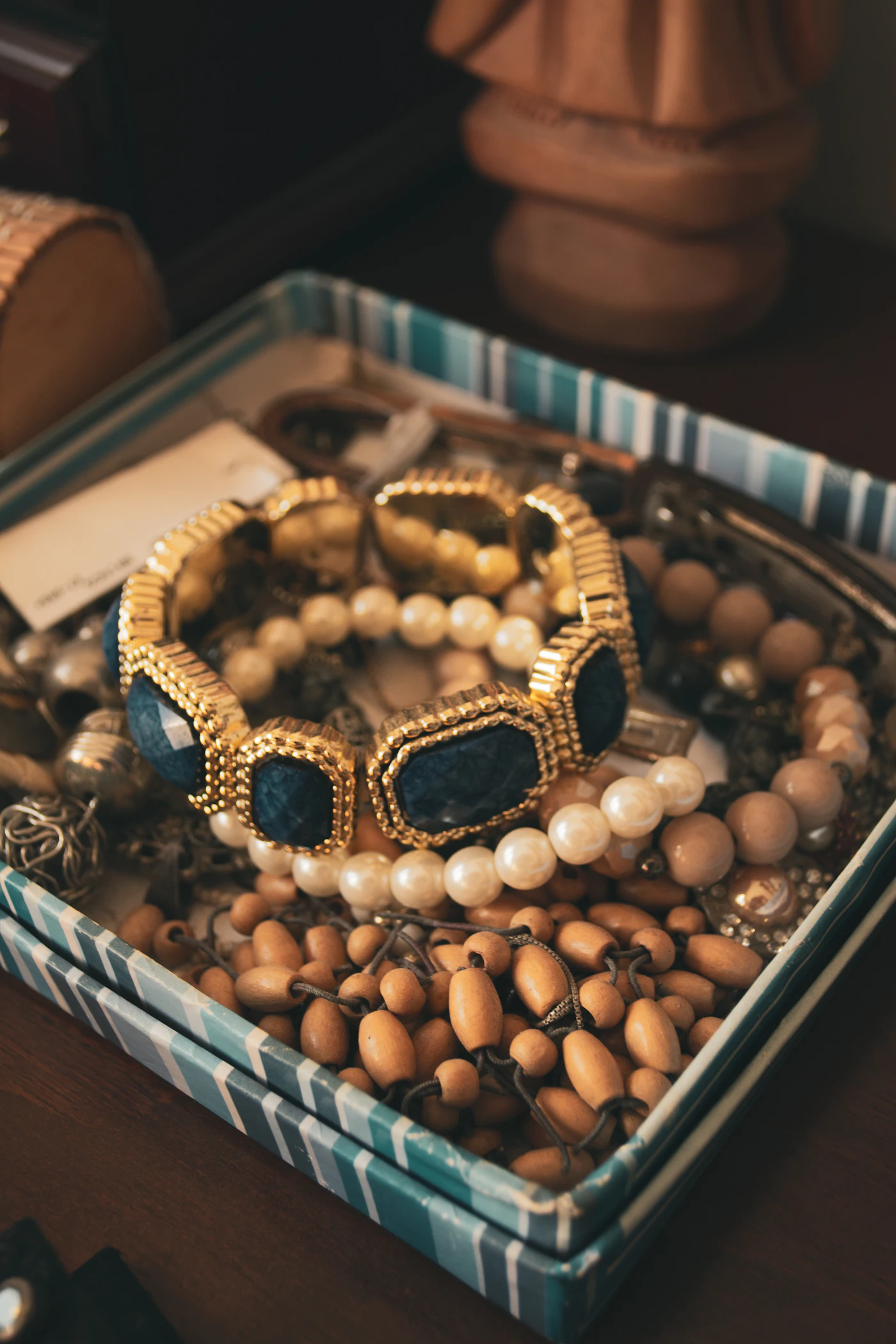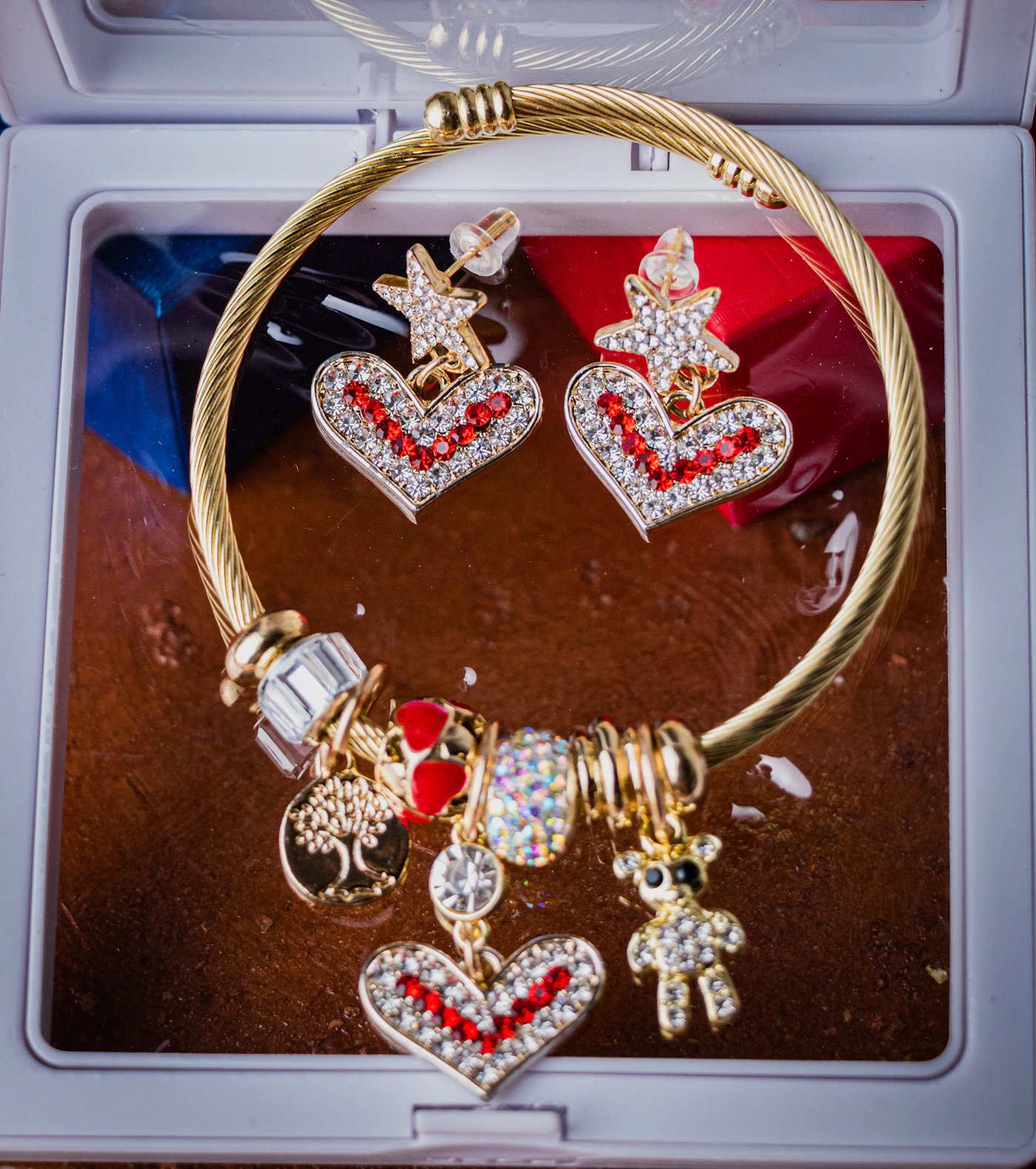
A ring sits beside the kettle, earrings collect on a shelf and three necklaces share one hook. Each location makes sense in the moment, but getting dressed turns into a search. The solution is less about buying a beautiful box and more about giving your jewellery a repeatable route home.
Start by gathering your pieces on a clear, soft surface. Separate what you wear often, what you keep for occasions and what needs attention. Do not clean everything as part of the sorting process; first identify the materials and the condition of each item.
Build around the pieces, not the organiser
Count the storage problems you actually have. Fine chains need a way to stay separated; larger cuffs need enough space; earrings benefit from staying in pairs. A box full of ring slots is not useful if most of your collection consists of necklaces.
Measure the drawer or shelf before shopping. Open the organiser in that space on paper: will the lid lift, can you reach the back compartment and does a long necklace fit without being forced into a tiny pocket? Practical access matters more than the product photograph.
Separate contact points
GIA highlights proper storage as part of jewellery care. Store pieces so that they do not rub together unnecessarily, and use a suitable soft compartment or pouch. Follow individual guidance for delicate materials rather than assuming one airtight container suits everything.
Keep chain fastenings closed where appropriate and give each necklace its own space. Leave room around pendants and avoid piling heavier pieces on fine links. The aim is not a perfect display; it is to remove the avoidable friction created by a crowded drawer.
Create a landing place and a return habit
Choose one secure, dry place where you normally remove jewellery. A small contained tray can hold the day’s pieces briefly, away from sinks, children and pets. It is a transition point, not the long-term home for your whole collection.
Return those pieces to their compartments at a regular moment that already exists in your day. If the organiser is too difficult to open or too far from where you undress, simplify the system. An easy habit does more than a complicated arrangement you rarely use.
Keep repairs visible without mixing them in
Give damaged or uncertain pieces a separate labelled pouch. A loose clasp or unfamiliar inherited stone should not disappear back into the daily collection. Add a short note describing what needs checking so that the next visit to a jeweller is straightforward.
Photograph the contents of each compartment for your own reference and keep purchase information separately. When considering another storage product, first ask whether you can rearrange what you have. A smaller, well-used collection rarely benefits from an oversized organiser that encourages more accumulation.
Find your best fit
| Consider | Best for | The tradeoff |
|---|---|---|
| A divided drawer tray | Seeing a compact collection at once | Needs a drawer that opens comfortably |
| Individual soft pouches | Flexible separation and occasional pieces | Labels help avoid searching every pouch |
| A small daily landing tray | A consistent removal habit | Needs regular emptying into proper storage |
A more considered purchase
- Measure the storage location before purchasing.
- Choose compartments for your actual collection.
- Keep jewellery away from sinks and busy edges.
- Set aside pieces needing assessment instead of wearing them again.
Your questions, considered
Is an open display always a bad idea?+
It depends on the location and piece. Consider exposure, dust, accidental knocks and the maker’s storage guidance. A display should not make a delicate item harder to protect.
Should I buy the largest organiser I can fit?+
Choose enough space to separate what you own comfortably. Extra capacity is useful only when it solves a real problem; an oversized box can make a small collection less convenient.
The takeaway
The best storage system is easy to return to. Start with separation, accessible compartments and one reliable habit, then buy an organiser only if it improves that routine.
Further reading & sources
Material and care references checked September 7, 2026. Styling recommendations reflect our editorial judgment.