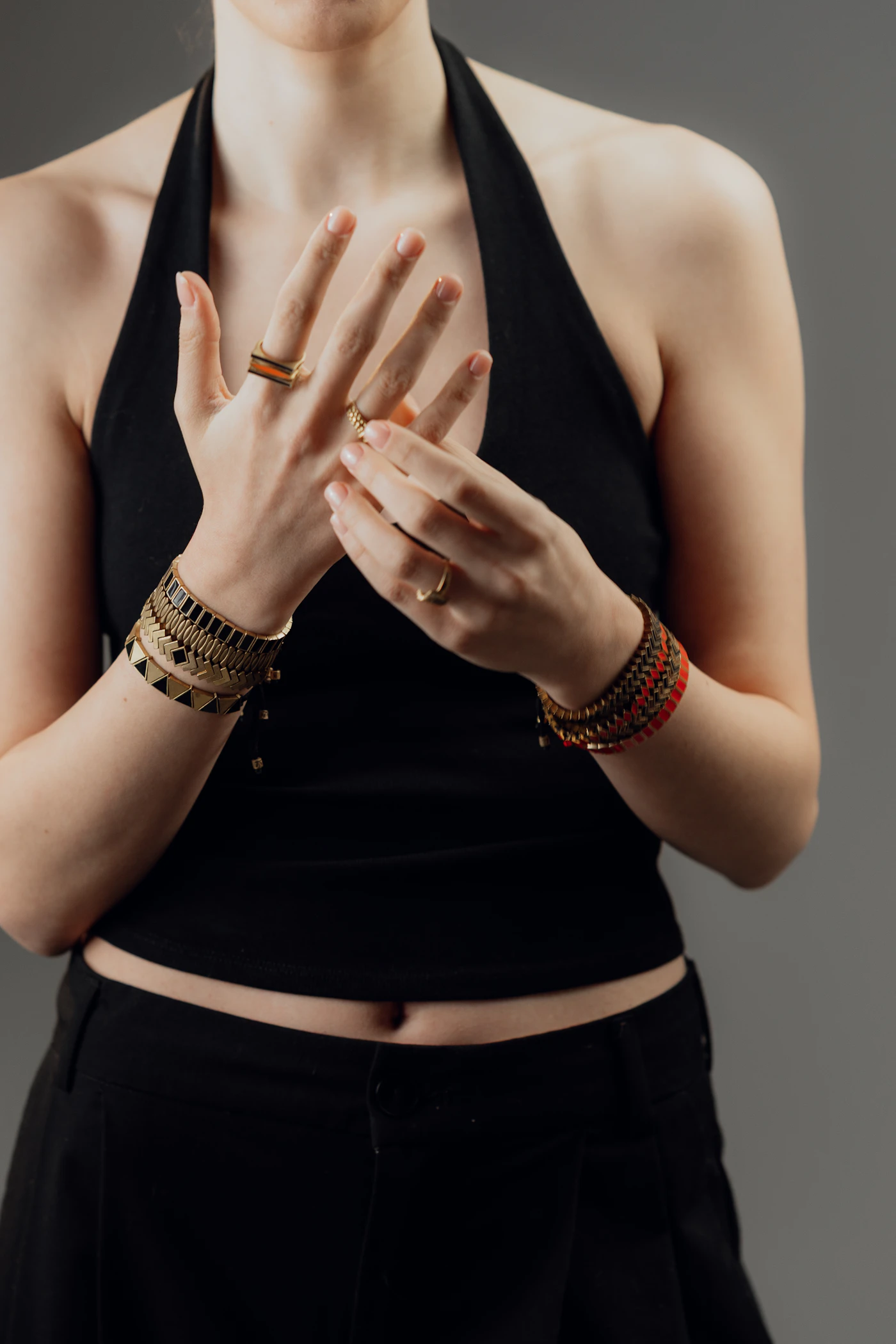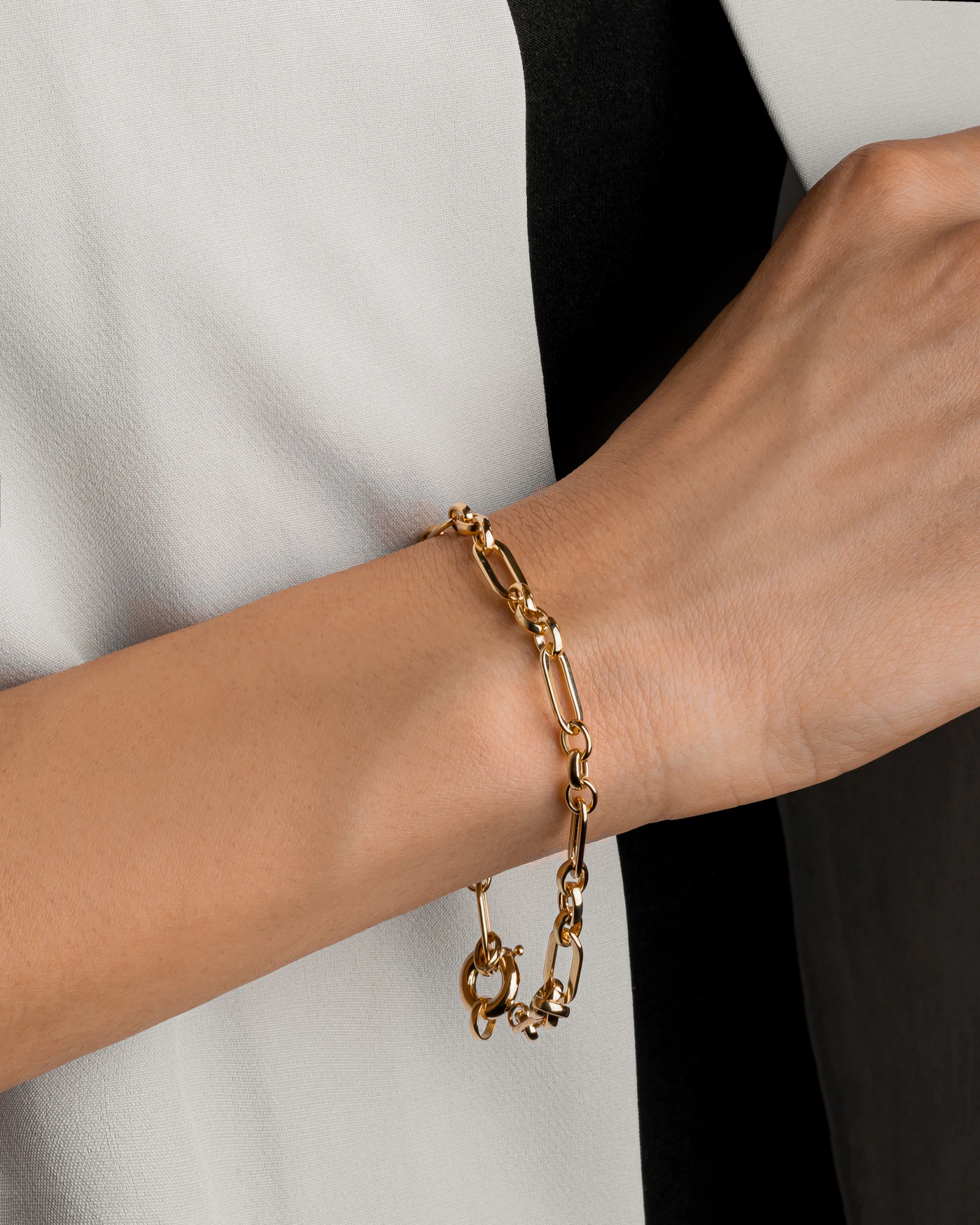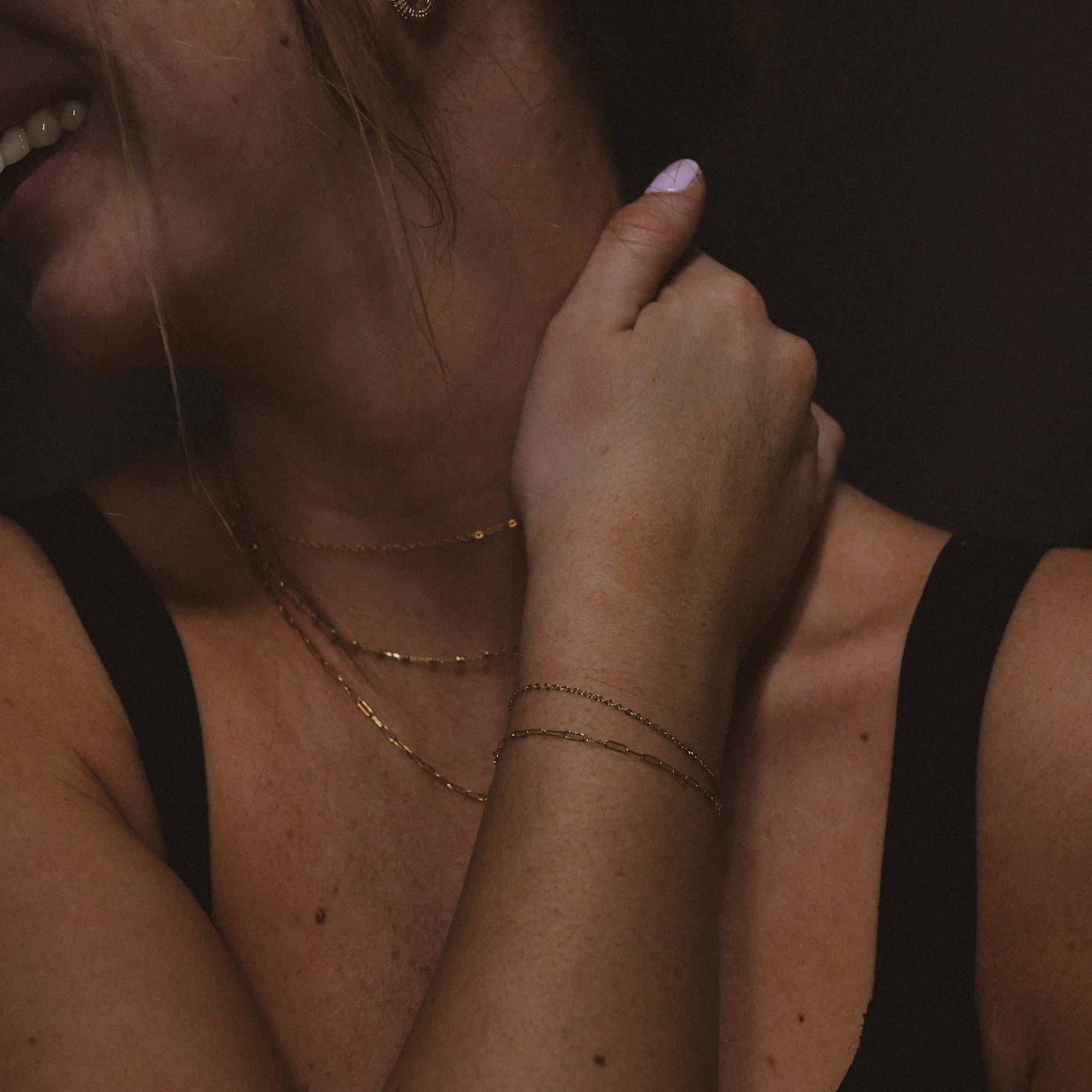
A cuff looks decisive against a simple dress. A chain bracelet slips into a collection almost unnoticed. Both can be good purchases, but they solve different wardrobe problems. If you are deciding between them, start by describing the day in which you expect to wear the piece most often.
Someone who wants one accessory to finish an evening outfit has a different brief from someone who wants a quiet detail through a long working week. Neither brief is more sophisticated. The better purchase is the design that meets yours without requiring a different routine.
Decide how much presence you want
A cuff usually creates a continuous area of shape, while a chain breaks its outline into links and movement. Try imagining each against a familiar plain sleeve. If your outfit already includes a patterned jacket, large earrings or a textured bag, you may prefer a bracelet that contributes less visual information.
For a simple sleeveless outfit, a cuff can become the main jewellery decision. That can make getting dressed easier: one piece provides the emphasis. A chain tends to invite closer attention, which may suit someone who enjoys jewellery primarily for themselves rather than as a noticeable outfit feature.
Treat fit as a construction question
A cuff's opening, internal width and profile matter alongside wrist size. Do not assume that an open shape can be bent indefinitely. Follow the seller's guidance and ask for dimensions when they are absent. A comfortable cuff should not depend on repeated reshaping every time you get dressed.
A chain needs a usable length and a fastening you can operate. An extender offers choices, but its loose tail may become part of the wearing experience. Check whether the chain rolls, twists or sits with a preferred side facing upwards. These details can matter more than a small difference in the photographed design.
Think about your hands at work
If much of your day happens at a desk, consider where each design will touch the surface. A broad cuff can feel conspicuous beneath your wrist. A chain may move more but occupy less space. Neither outcome is guaranteed by category alone; a substantial chain can be more noticeable than a carefully shaped narrow cuff.
Use a familiar desk position during an indoor fitting, then reach for a mug and pull on a sleeve. If you immediately want to remove the piece, that is useful information. Reserve it for occasions where its character makes sense, or choose a different design for daily use.
Plan the rest of the jewellery
One cuff can make a ring stack feel unnecessary. A fine chain may leave more room for a favourite ring or watch. Lay the pieces you already own together before shopping. Notice whether the proposed addition fills a gap or simply repeats a shape you seldom wear.
For mixed metals, consider keeping the silhouettes uncomplicated. For matching metals, introduce a different scale or texture if the arrangement feels overly coordinated. The goal is not to follow a prescribed formula; it is to make your existing wardrobe easier to use with one considered addition.
Compare the complete purchase
Inspect the listed material, dimensions and return terms for each shortlisted piece. A striking product image should not compensate for an unclear fastening or an unexplained size. Ask what adjustments are possible and whether they affect returns. Avoid personalisation until you know the underlying design works.
If you remain undecided, choose the piece that suits the majority of your intended outings. You can enjoy the other shape without buying it immediately. An occasional statement cuff and a daily chain are separate needs; a compromise that satisfies neither is unlikely to become a favourite.
Find your best fit
| Consider | Best for | The tradeoff |
|---|---|---|
| Broad cuff | Finishing a simple outfit with one visible piece | It needs room around sleeves and desk surfaces. |
| Fine chain | A subtle detail that works with other jewellery | Small fastenings and moving tails need checking. |
| Narrow hinged bracelet | A defined shape between the two extremes | The hinge and internal size deserve close inspection. |
A more considered purchase
- Describe the main wearing occasion.
- Check internal dimensions or chain length.
- Practise fastening without assistance.
- Try it with an existing ring and watch.
Explore the possibilities
Use the criteria above to compare individual pieces. These links lead to retailer collections, not a tested product shortlist. Check current materials, measurements, availability and return terms before ordering.
Monica Vinader
Browse current jewellery and read the details and terms for your chosen piece.
Missoma
Browse current pieces and compare dimensions, finishes and styling options.
Your questions, considered
Can a cuff be an everyday piece?+
Yes, if its fit and shape suit your routine. Judge the specific cuff rather than assuming all cuffs are too formal or too large.
Should I buy both as a set?+
Only if both fill a clear role. Buying one first gives you useful evidence about your preferred bracelet fit.
The takeaway
Choose a cuff for a shape you want to see, and a chain for a wearing experience you want to repeat. Use the retailer links to compare construction as carefully as style.