You put on the watch you use every morning and add a bracelet for a little more personality. By the first meeting, both have slipped towards your hand. The problem is not that watches and bracelets cannot work together. It is that two separate purchases have been asked to behave like a considered pair.
Start with the watch as the fixed point. Its size, strap, fastening and position already shape your daily routine. A bracelet should complement that routine, whether that means sharing the wrist occasionally or looking better on the other arm.
Give the watch breathing room
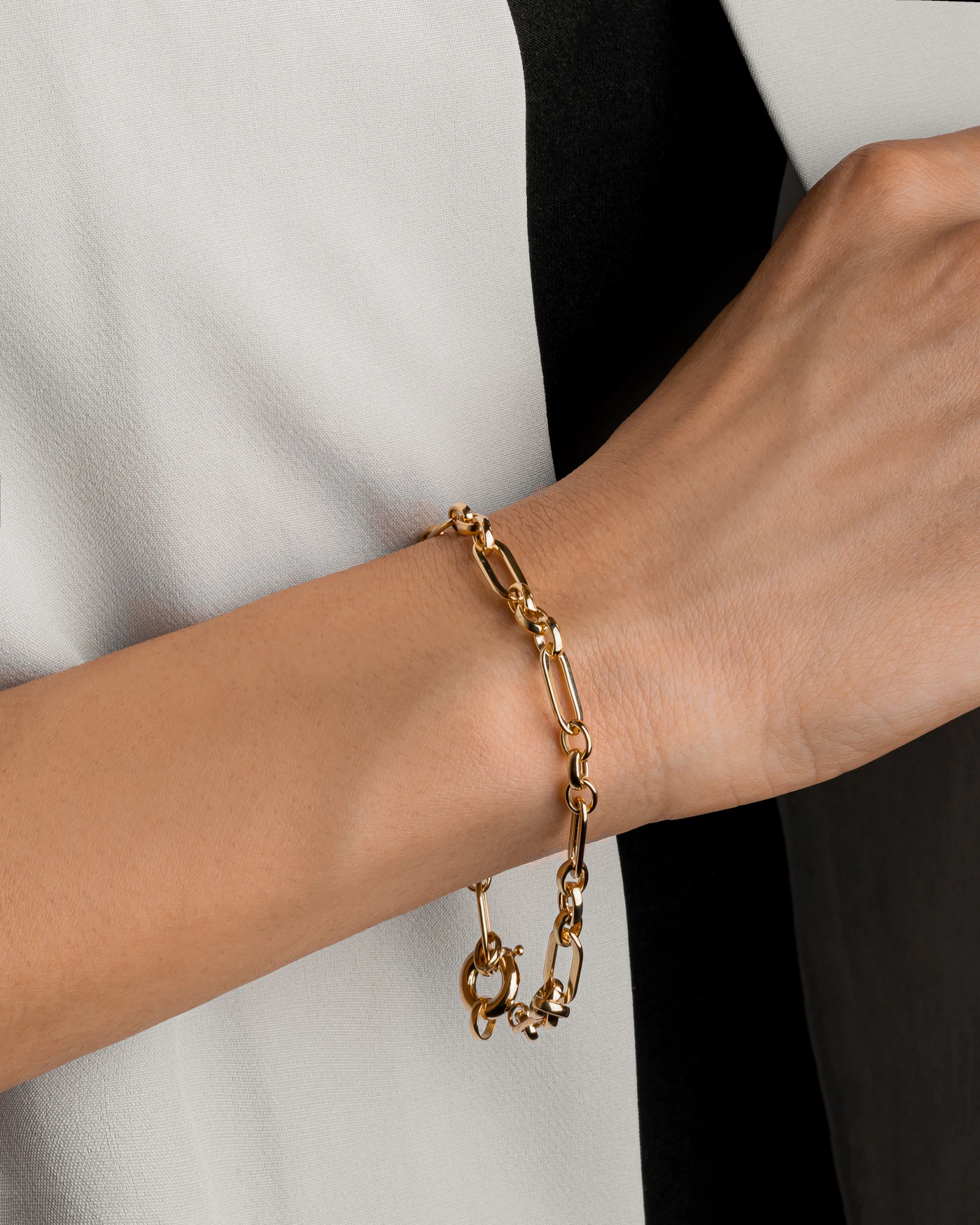
Look at your wrist from the side as well as from above. A watch may appear modest in a photograph while its case rises significantly above the strap. Adding a rigid bracelet alongside it can create a crowded profile. A narrow chain might look calmer, but check where its clasp settles when your hand is resting.
There is no required gap to reproduce. Instead, decide whether you want the pieces to stay visually distinct. If they constantly overlap, first try moving the bracelet to your other wrist. The balance across both arms can be more appealing than forcing everything into a single stack.
Match the visual weight, not every detail
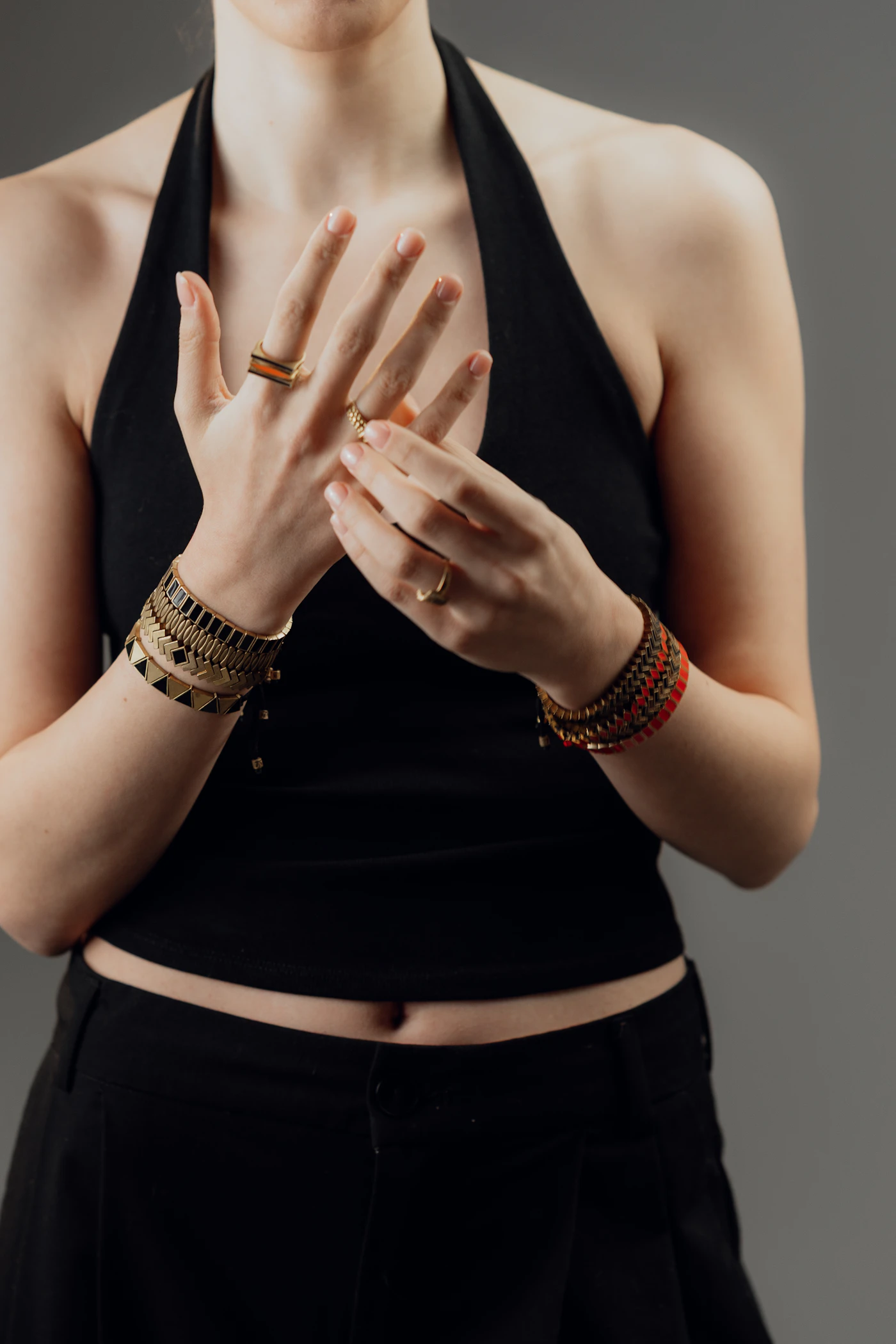
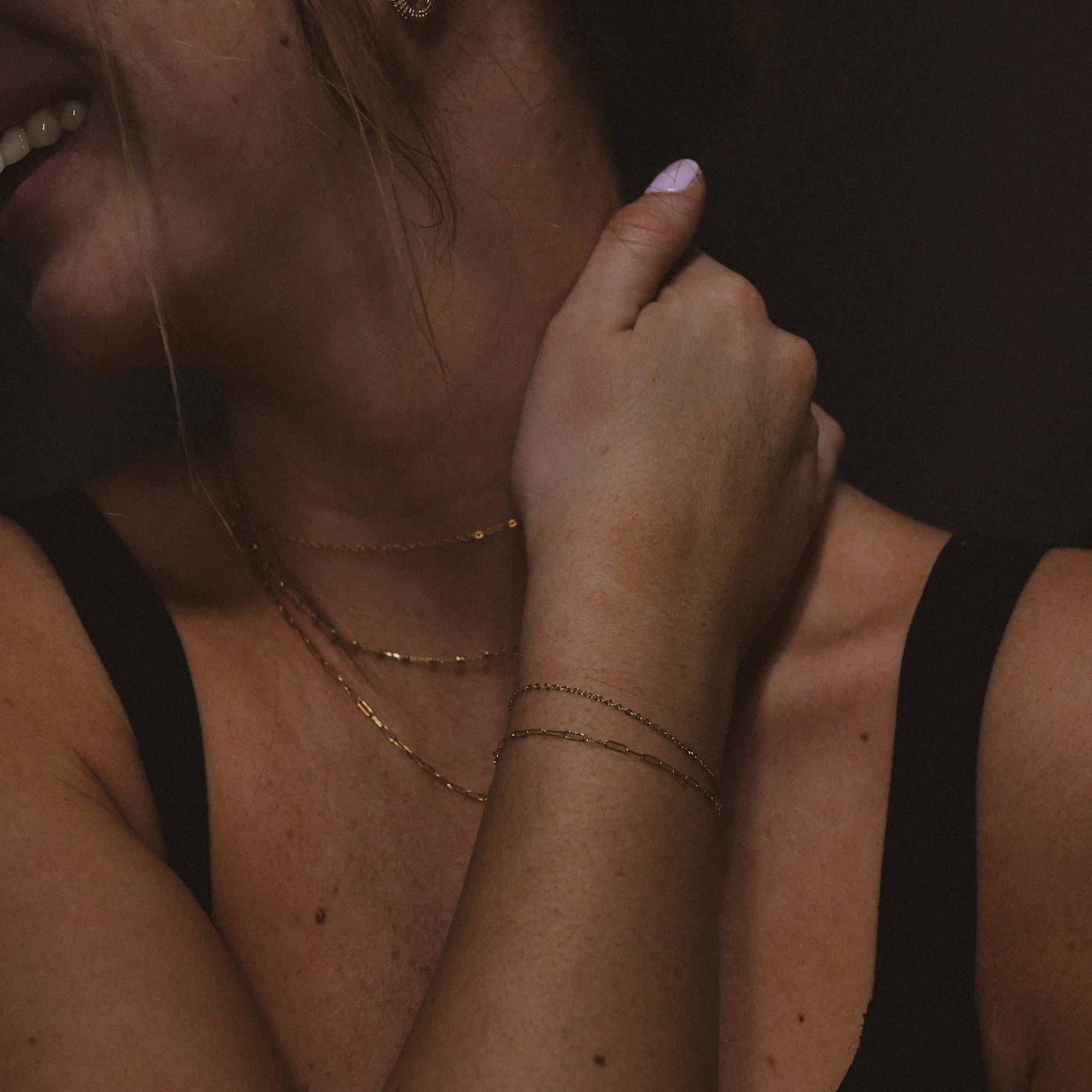
A substantial watch can sit comfortably beside one clear bracelet shape. Several very fine chains may disappear beside it, while several large bangles can make the whole arrangement feel busy. These are styling judgments, so use a mirror at ordinary distance rather than only a close photograph.
You do not need identical metal colours. Repeating one element is enough to make a mixed pairing feel deliberate: the warmth of the watch dial, the rounded shape of the case or the colour of a strap. If the combination feels unresolved, simplify the bracelet shape before buying a complete matching set.
Let your sleeves make a decision
Wear your normal shirt, jacket or knitwear while trying the combination. A cuff that slides over the watch alone may bunch once a bracelet is added. For a day involving fitted sleeves, a bracelet on the opposite wrist often gives both pieces more space and makes dressing easier.
An open sleeve changes the possibilities. With a rolled shirt cuff, you may enjoy a more visible bracelet and some movement. With a coat you remove repeatedly, projecting charms can become an extra thing to manage. Choose for the clothes you actually wear most frequently, not just a bare-arm product photograph.
Listen as well as look
Rest your hands on a desk and walk around the room. Some people enjoy the sound of moving bangles; others find it distracting beside a watch. Ask yourself whether you would notice the arrangement in a quiet meeting, during a meal or while working with your hands.
Also check for constant contact between the pieces. If preserving pristine finishes matters to you, wearing jewellery where it repeatedly rubs together is an unnecessary compromise. Separating the wrists is a straightforward choice. A bracelet does not become less stylish because it has its own space.
Shop for the missing role
Identify what the bracelet should add before browsing: texture, a small point of colour or a cleaner evening finish. This prevents buying another watch-like object simply because it resembles what you already own. Compare the bracelet's width and length with your watch instead of judging either measurement in isolation.
Look for photographs of the fastening and ask about sizing when the description is incomplete. If you expect to alternate wrists, measure both and check the adjustable range. Begin with one bracelet that works independently; a successful watch pairing should be an additional use, not its only reason to exist.
Find your best fit
| Consider | Best for | The tradeoff |
|---|---|---|
| Fine chain beside a watch | A restrained pairing with little visual bulk | It may shift underneath the watch. |
| Cuff on the opposite wrist | A balanced outfit with a clear statement | The cuff still needs its own sleeve space. |
| Colourful bracelet with a plain strap | A casual point of contrast | Additional patterns can make the pairing busy. |
A more considered purchase
- Use the watch you actually wear as the starting point.
- Try the pairing with long sleeves.
- Check sound and contact during movement.
- Choose a bracelet that also works alone.
Explore the possibilities
Use the criteria above to compare individual pieces. These links lead to retailer collections, not a tested product shortlist. Check current materials, measurements, availability and return terms before ordering.
Missoma
Browse current pieces and compare dimensions, finishes and styling options.
Mejuri
Explore the current jewellery collection and check material details on each listing.
Your questions, considered
Must the metals match?+
No. Try repeating a shape, tone or finish instead. A mixed pairing can look considered when the rest of the wrist is simple.
Which wrist should hold the bracelet?+
Use whichever arrangement feels comfortable. There is no styling requirement to place it beside your watch.
The takeaway
The strongest watch-and-bracelet combination leaves room for both pieces to be useful. Browse a small selection, compare actual dimensions and let your usual sleeves provide the final vote.