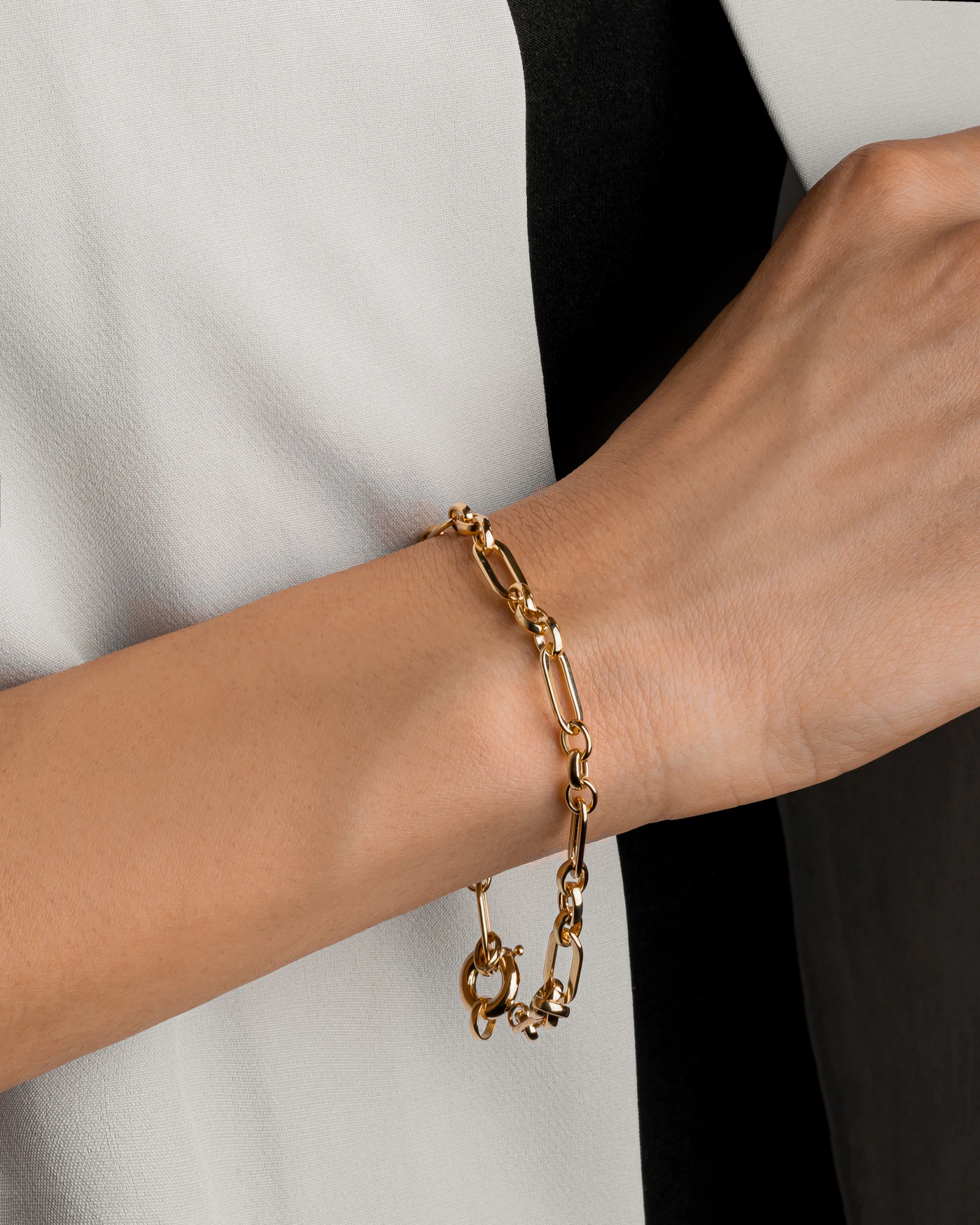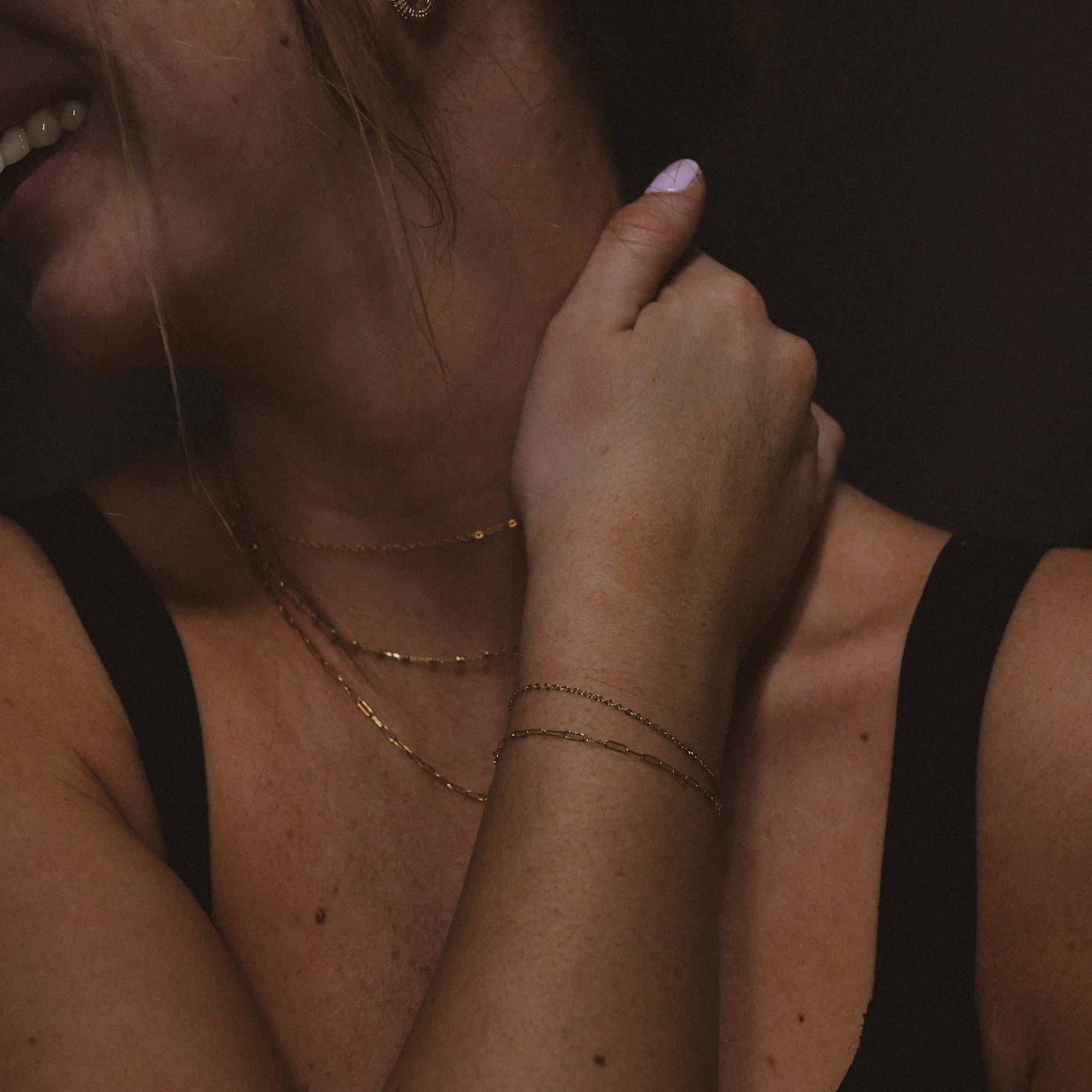
The bracelet looks balanced in the photograph, but your day involves carrying coffee, pulling on sleeves and resting your hands beside a keyboard. A measurement can narrow the options; it cannot describe every movement. The useful question is where you want the bracelet to sit, and how much movement you enjoy noticing.
Before browsing, find a bracelet you already reach for, even if it is inexpensive. Its fit is more useful evidence than a model photograph. If you have no reference piece, start with a flexible strip of paper and a clear idea of the activities the new bracelet must accommodate.
Measure for the design you are buying
Measure your wrist gently at the place you expect the bracelet to rest. Record the circumference without adding a guessed allowance, then compare it with the seller's actual sizing instructions. Some size charts already include room for movement; others describe the finished product. Mixing the two can make a sensible measurement produce an unexpectedly loose fit.
A chain bracelet, a closed bangle and an open cuff need different checks. A bangle must pass over your hand, so wrist circumference alone is insufficient. A cuff needs an appropriate opening and interior shape. Ask for missing dimensions instead of translating every product into the same universal size.
Run a seated movement check
When an eligible returnable order arrives, try it indoors over a clean surface. Rest your hands in your usual typing position, reach across a table and bend your wrist as if using a door handle. Notice whether the clasp sits beneath your wrist, whether a charm touches the desk and whether the piece catches on a familiar sleeve.
Comfort does not require total stillness. A loose chain may be exactly the effect you want for dinner, while the same movement could become annoying during concentrated work. Judge the bracelet against its intended job, rather than rejecting all movement or assuming you will stop noticing an uncomfortable edge.
Read adjustability carefully
An extender is useful only if its shortest and longest wearable positions include your preferred fit. Check how many attachment points are offered, and whether the unused tail would hang below your wrist. A sliding fastening offers a different experience: look for instructions showing how it is operated and whether you can manage it independently.
Avoid bending an open cuff repeatedly to make an unsuitable size work. If the retailer permits adjustment, follow its specific limits. For someone who finds small clasps awkward, fastening access deserves the same priority as appearance. Practise the motion before committing to a nonreturnable personalised version.
Consider what shares the wrist
A watch, shirt cuff and bracelet all compete for the same small area. Try the proposed combination with your most commonly worn watch and sleeves. If they bunch together, place the bracelet on the other wrist or choose a shorter, flatter design. Adding extra length rarely solves every collision; it can simply move the bracelet farther onto your hand.
For a gift, asking for the measurement of a favourite bracelet is often less intrusive than asking for a wrist measurement. Specify whether you need its total length or inside dimensions. A photograph with no scale is not enough to establish a reliable fit.
Buy with a clear fallback
Shortlist designs that publish dimensions and explain their returns. Before ordering, establish whether adjusting a chain, removing a tag or adding engraving changes eligibility. Keep packaging while assessing fit and avoid wearing the piece through a full day if that would exceed the shop's trial conditions.
If you sit between sizes, send the seller your actual measurements and the way you want the bracelet to move. A useful answer should refer to that particular construction. Compare the suggested fit with the reference bracelet you started with, then choose the option that requires the fewest daily compromises.
Find your best fit
| Consider | Best for | The tradeoff |
|---|---|---|
| Adjustable chain | A first bracelet with several wearable lengths | An extender can hang below the wrist. |
| Hinged bangle | A defined shape with easier hand access | Interior dimensions still need checking. |
| Open cuff | A sculptural look without a small clasp | The opening and profile must suit your wrist. |
A more considered purchase
- Record wrist circumference before adding allowances.
- Check the product-specific size chart.
- Test sleeves, desk position and fastening.
- Read adjustment and return conditions.
Explore the possibilities
Use the criteria above to compare individual pieces. These links lead to retailer collections, not a tested product shortlist. Check current materials, measurements, availability and return terms before ordering.
Mejuri
Explore the current jewellery collection and check material details on each listing.
Monica Vinader
Browse current jewellery and read the details and terms for your chosen piece.
Your questions, considered
Should a bracelet leave an indentation?+
A piece that pinches or feels restrictive is a poor fit for ordinary wear. Remove it and reassess the dimensions rather than trying to get used to discomfort.
Is one size a reliable gift option?+
Only when its stated range suits the recipient. One size describes the offer, not a guarantee that it fits every wrist.
The takeaway
A well-chosen bracelet earns its place by feeling natural in the moments you repeat. Begin with measurements, then let movement decide. Browse the linked retailers for dimensions and fastening details before narrowing by finish.