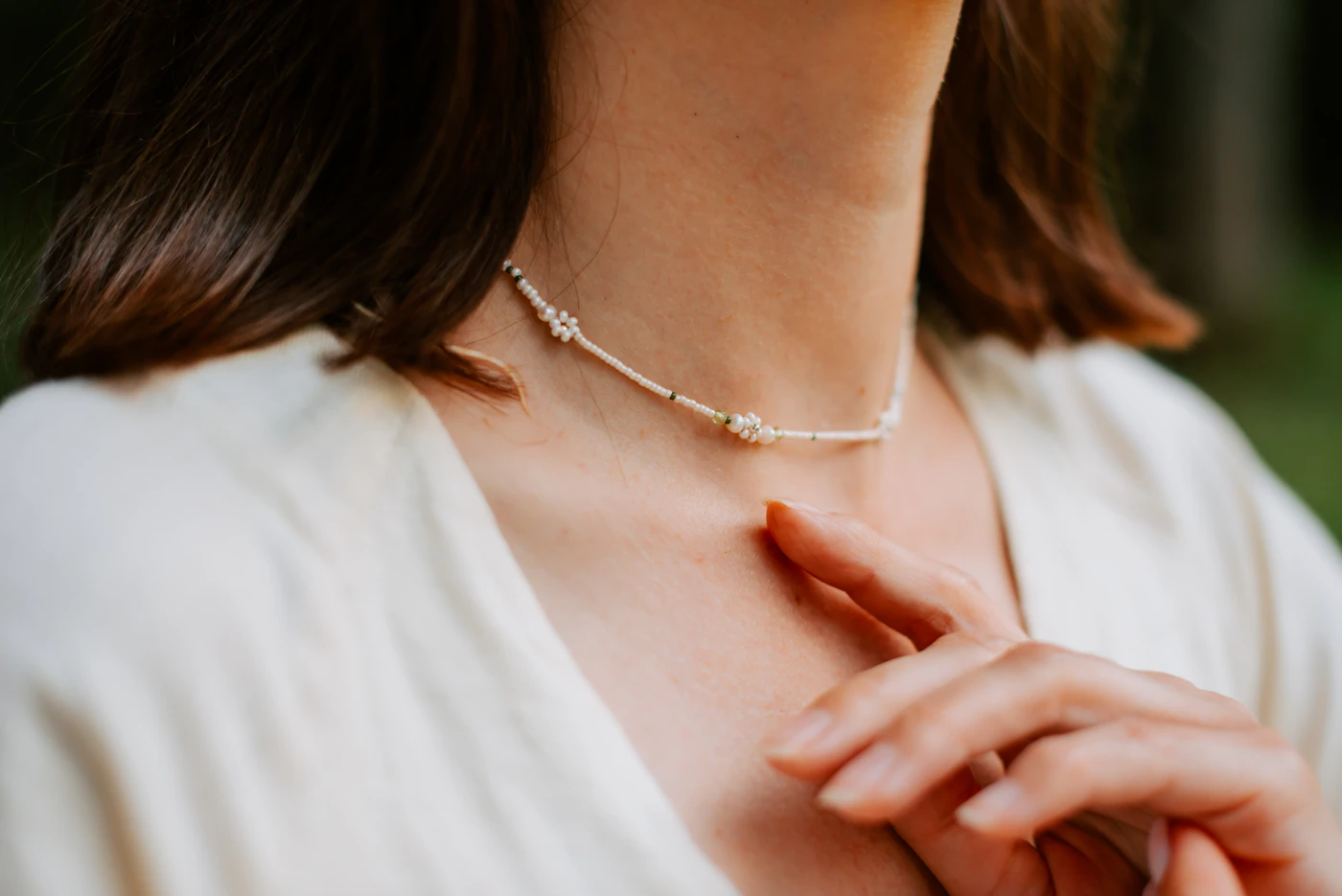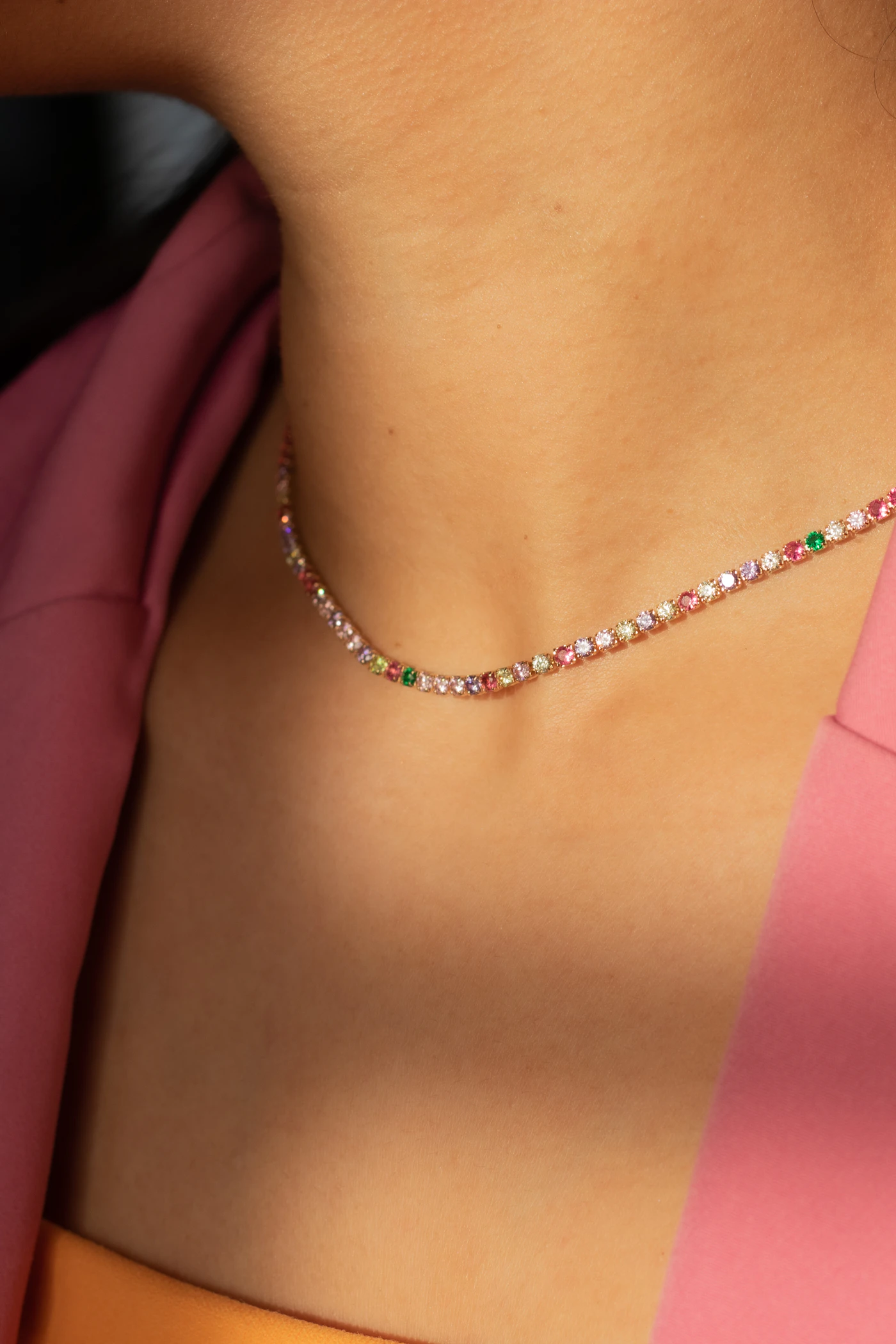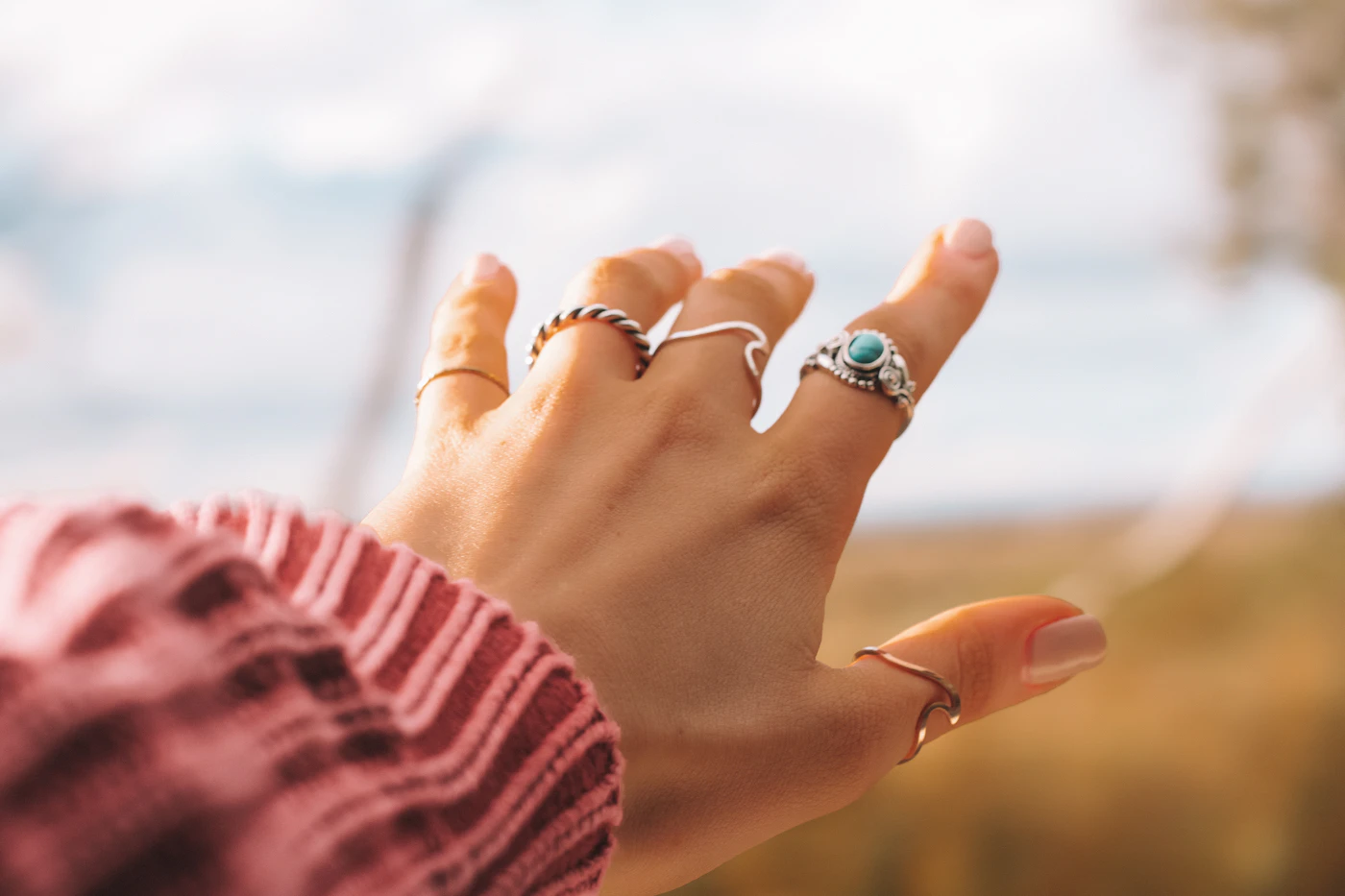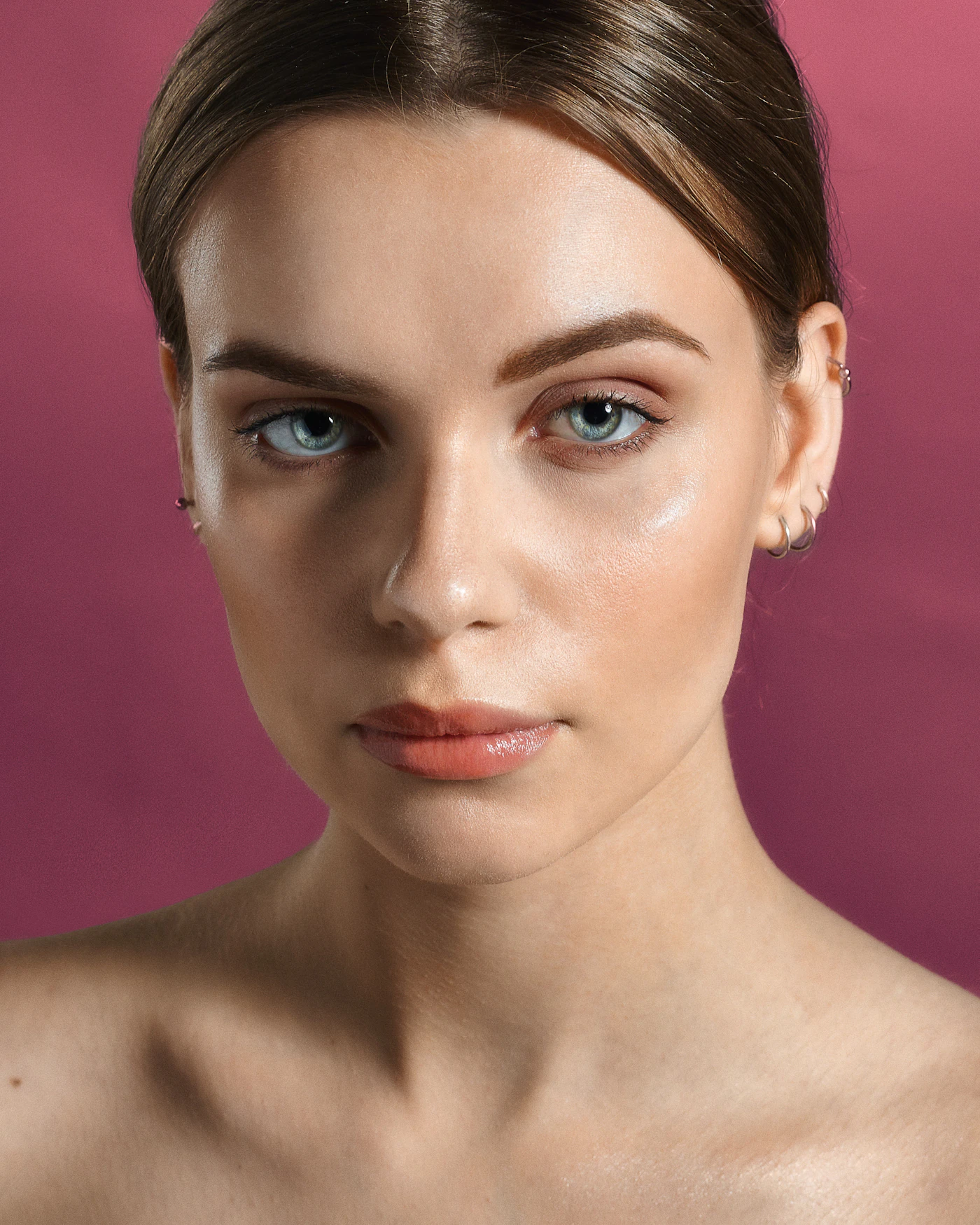
A plain black dress, an oversized white shirt, or a familiar knit can feel finished with one strong piece of jewellery. The interest comes from a deliberate focal point, not from filling every available space. Statement jewellery is therefore less about size alone and more about choosing where the eye should land.
A curved cuff may be striking even without stones. A short necklace can make more impact than a much longer fine chain. Begin with the outfit you want to wear and decide which area can carry an expressive detail comfortably.
Choose the focal point before adding companions
If the earrings are the focus, put them on first and pause before adding a necklace. You may find that a ring provides enough support. If the necklace is the main event, quieter earrings can leave its outline clear. This is a useful starting method rather than a rule against wearing bold pieces together.
Look at the entire outfit in a full-length mirror. A close-up photograph can exaggerate jewellery while hiding a large collar, printed skirt, or substantial bag. The best amount of detail depends on the whole silhouette, so judge it from the distance at which other people will normally see you.
Match scale to clothing structure
A crisp shirt can provide a clear backdrop for a sculptural earring, while a soft draped top may work well with a smooth pendant. Consider where fabric gathers and where jewellery lands. A large necklace caught against a busy seam may look less intentional than the same piece sitting in an open neckline.
Volume elsewhere matters too. Wide sleeves can conceal a delicate bracelet but frame a cuff when pushed back. A high collar may support prominent earrings while making a short necklace feel crowded. You do not need a body-type formula; try the relationship between the actual garments and the piece.
Assess weight and movement honestly
An earring that looks appealing for a few minutes may not suit a long event. Check the listed dimensions and weight where available, and try it with normal head movements. Larger pieces can also catch hair or scarves. A hollow construction may offer a different wearing experience, but only rely on construction details the seller actually provides.
For necklaces, notice whether the central element stays flat or turns as you walk. With cuffs, test bending the wrist and slipping on a jacket. Comfort is part of the visual effect: a piece you continually adjust rarely feels as effortless as one that stays where you intended.
Let texture carry some of the statement
You can create presence through an irregular surface, a broad polished shape, or a contrast between a chain and soft fabric. Colourful stones are another option, but they are not required. If you prefer a restrained wardrobe, an interesting silhouette in a familiar metal colour may offer a more useful first purchase.
Avoid assuming that every statement piece belongs only at parties. Try it with jeans and a simple top before reserving it for rare occasions. Equally, there is no obligation to make a dramatic item work at the supermarket. Buy for the level of expression that feels enjoyable in your actual life.
Compare versatility without erasing personality
Choose three outfits you own and imagine the piece with each. If it works with only one, ask whether that outfit appears often enough to justify the purchase. A distinctive design can still be practical when its neckline, weight, and fastening suit your routine. Versatility does not have to mean invisibility.
When browsing the merchants below, compare silhouette, dimensions, material information, and return conditions. Check whether an earring listing covers a pair or a single item. Save the strongest candidate and revisit it after a pause; a statement purchase should still appeal when the initial excitement of the product photograph has faded.
Find your best fit
| Consider | Best for | The tradeoff |
|---|---|---|
| Sculptural earrings | Open collars and high necklines | Weight and hair contact need attention |
| Broad cuff | Simple tops with clear wrist space | Can compete with a watch or fitted sleeve |
| Bold pendant | Plain clothing with a useful neckline | May turn or land against fabric seams |
A more considered purchase
- Choose one main focal point first.
- Check the outfit in a full-length mirror.
- Test weight, movement and fastening.
- Confirm whether earrings are sold singly or as a pair.
Explore the possibilities
Use the criteria above to compare individual pieces. These links lead to retailer collections, not a tested product shortlist. Check current materials, measurements, availability and return terms before ordering.
Missoma
Browse current pieces and compare dimensions, finishes and styling options.
Monica Vinader
Browse current jewellery and read the details and terms for your chosen piece.
Your questions, considered
Can I wear a statement necklace and large earrings together?+
Yes, if you like the result. Start by connecting them through shape, finish, or a deliberate contrast, and leave enough space around the neckline to see both. Remove one only if the combination feels crowded to you.
What is the safest first statement purchase?+
There is no universal choice, but a more expressive version of a category you already wear is often easier to judge. If you regularly enjoy hoops, a sculptural hoop may be a clearer experiment than an unfamiliar heavy necklace.
The takeaway
One strong detail can give simple clothes a new mood. Choose the focal point, test how it behaves, and let the rest of the outfit provide the space it needs.