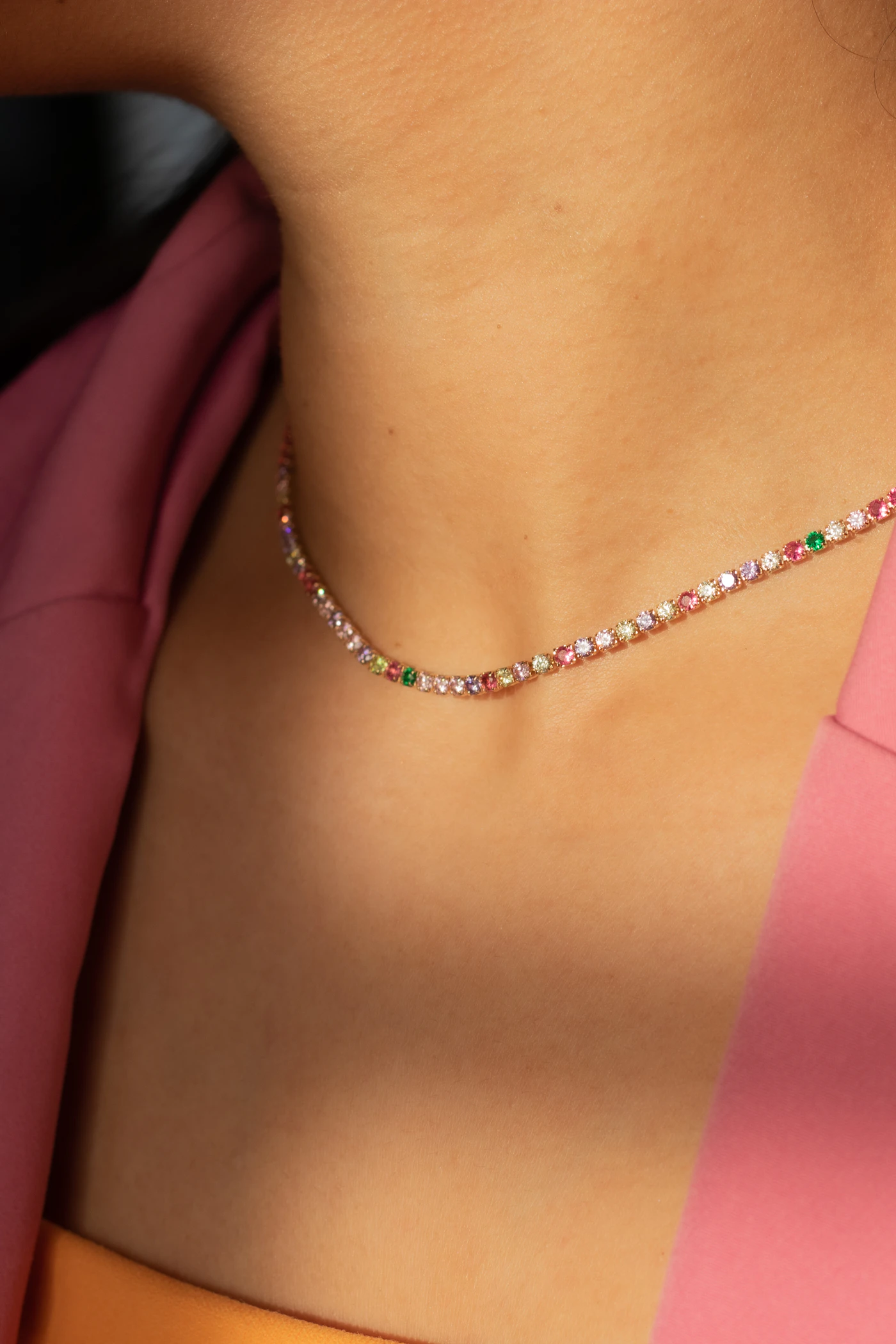
It is eight in the morning, your coffee is cooling, and the necklace you want is knotted around something you never wear. A jewellery capsule should solve that problem. Its purpose is to make getting dressed easier while leaving enough variety for a dinner invitation, a different neckline, or a day when you want to feel more visible.
Begin with your real week. A collection for someone wearing headphones at a desk will differ from one for someone working with their hands. Neither needs a prescribed number of pieces. What matters is that every addition earns a clear role.
Audit the pieces that already work
Lay out the jewellery you have worn in the last month, separately from sentimental pieces and occasional favourites. Write down why each regular succeeds: its clasp is manageable, its length suits your shirts, or its shape feels comfortable all afternoon. These observations are more useful than a generic essentials list.
Next identify duplication. Three fine pendants may serve the same purpose, while you have nothing that feels right with a high neckline. Do not discard meaningful jewellery to achieve a tidy photograph. Store it separately so the everyday group remains easy to navigate.
Choose a foundation with distinct jobs
A practical starting point is one comfortable pair of earrings, one necklace that suits frequent outfits, and one ring or bracelet if you enjoy wearing them. This is a proposal, not a shopping requirement. If bracelets catch on your desk, leave that category out. If earrings are your main form of expression, give them more space.
Choose different visual functions rather than nearly identical alternatives. A small hoop can handle ordinary mornings; a sculptural earring can change an evening outfit. A simple chain and a larger pendant offer clearer variety than two pendants with indistinguishable proportions.
Make compatibility visible before buying
Photograph your likely purchases beside pictures of three actual outfits. Consider collars, knit textures, sleeve lengths, and your usual bag hardware. Metal colours can differ without looking accidental when another detail, such as shape or finish, gives the group coherence.
Check measurements rather than relying on the model photograph. Necklace length, earring diameter, and ring width affect how a piece behaves. A capsule becomes frustrating when everything looks harmonious in a tray but two necklaces meet at the same point or an earring presses into your headphones.
Spend according to frequency and repair options
Give the most attention to pieces likely to receive regular wear. That does not automatically mean choosing the most expensive material. It means understanding the material description, checking the closure, and asking whether parts or repairs are available. A clearly described modest purchase is easier to assess than an expensive item with vague specifications.
Reserve a smaller part of your budget for experiments. Before buying an unfamiliar silhouette in a costly version, see whether the shape works through an in-person try-on or a returnable purchase. Check the actual return conditions first, especially for earrings and personalised pieces.
Keep the capsule responsive
Store the regular pieces where you get dressed, separated enough to avoid a daily tangle. At the end of a season, ask which pieces were repeatedly overlooked and why. A neglected necklace may need a different length rather than replacement; a bracelet may belong in your occasion collection.
When browsing the merchants below, search by the role you identified rather than by a promotion. Compare two or three candidates using the same measurements and material information. Leave the purchase until you can explain what it adds that your current pieces cannot already do.
Find your best fit
| Consider | Best for | The tradeoff |
|---|---|---|
| Small hoops and a chain | A consistent weekday routine | Less immediate variety for formal events |
| Studs and a sculptural pendant | Shirts and simple knitwear | The pendant may compete with decorative collars |
| Two contrasting earring pairs | People who rarely wear necklaces | Requires comfortable closures on both pairs |
A more considered purchase
- Name one specific gap before browsing.
- Measure a necklace that already sits well.
- Check the material and return terms.
- Keep sentimental pieces outside the daily selection.
Explore the possibilities
Use the criteria above to compare individual pieces. These links lead to retailer collections, not a tested product shortlist. Check current materials, measurements, availability and return terms before ordering.
Mejuri
Explore the current jewellery collection and check material details on each listing.
Missoma
Browse current pieces and compare dimensions, finishes and styling options.
Your questions, considered
How many pieces should a capsule contain?+
Enough to cover the situations you encounter repeatedly. Start with what you own and add only when a recurring outfit or activity reveals a gap. A numerical target can encourage unnecessary purchases.
Must everything use the same metal colour?+
No. Repeated shapes, similar scale, or a deliberate balance of colours can make mixed metals feel coherent. Choose a relationship you enjoy rather than replacing good pieces solely to achieve a match.
The takeaway
The strongest capsule is recognisable as yours and easy to use. Start with a working trio, notice what you reach for, and let experience determine the next purchase.