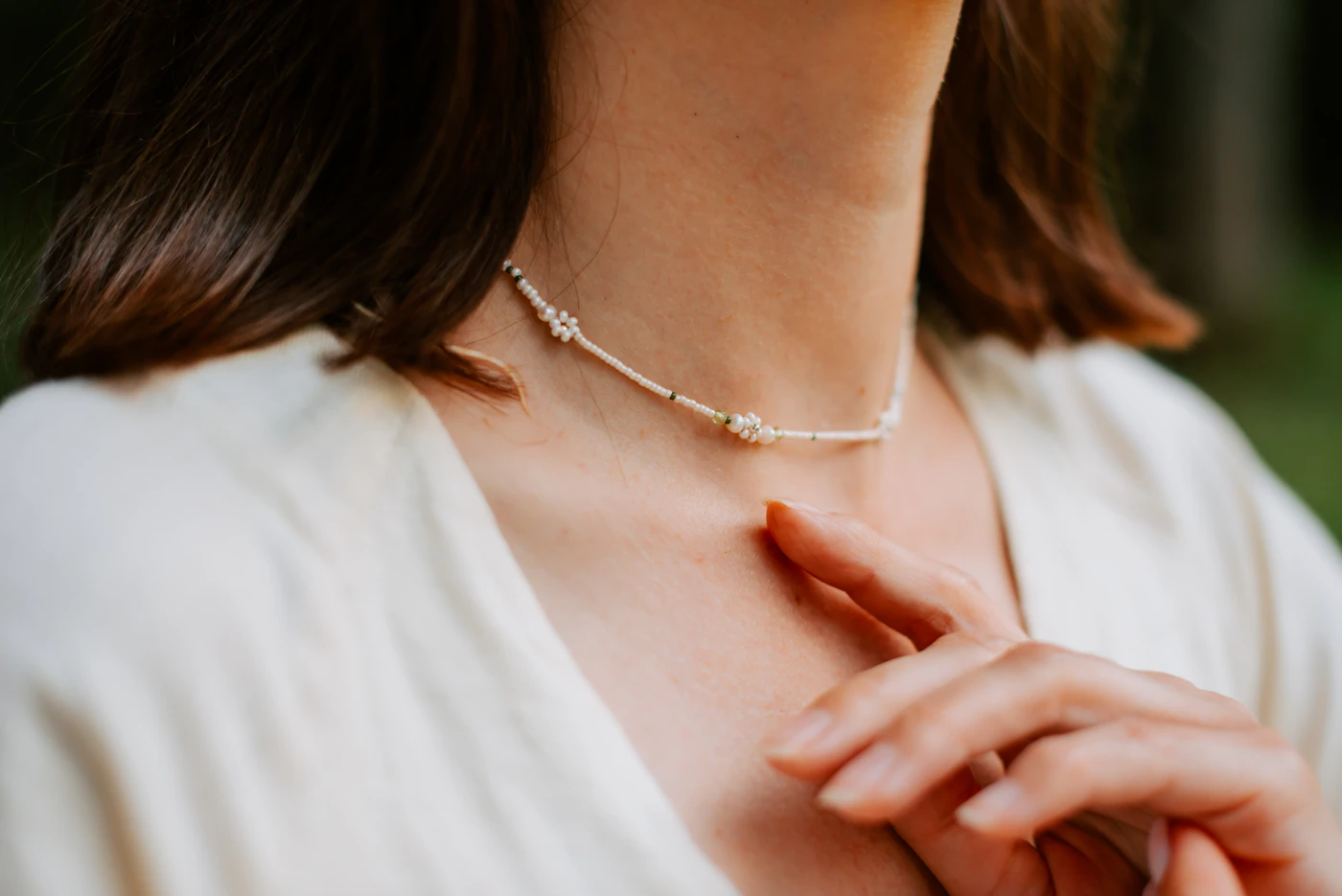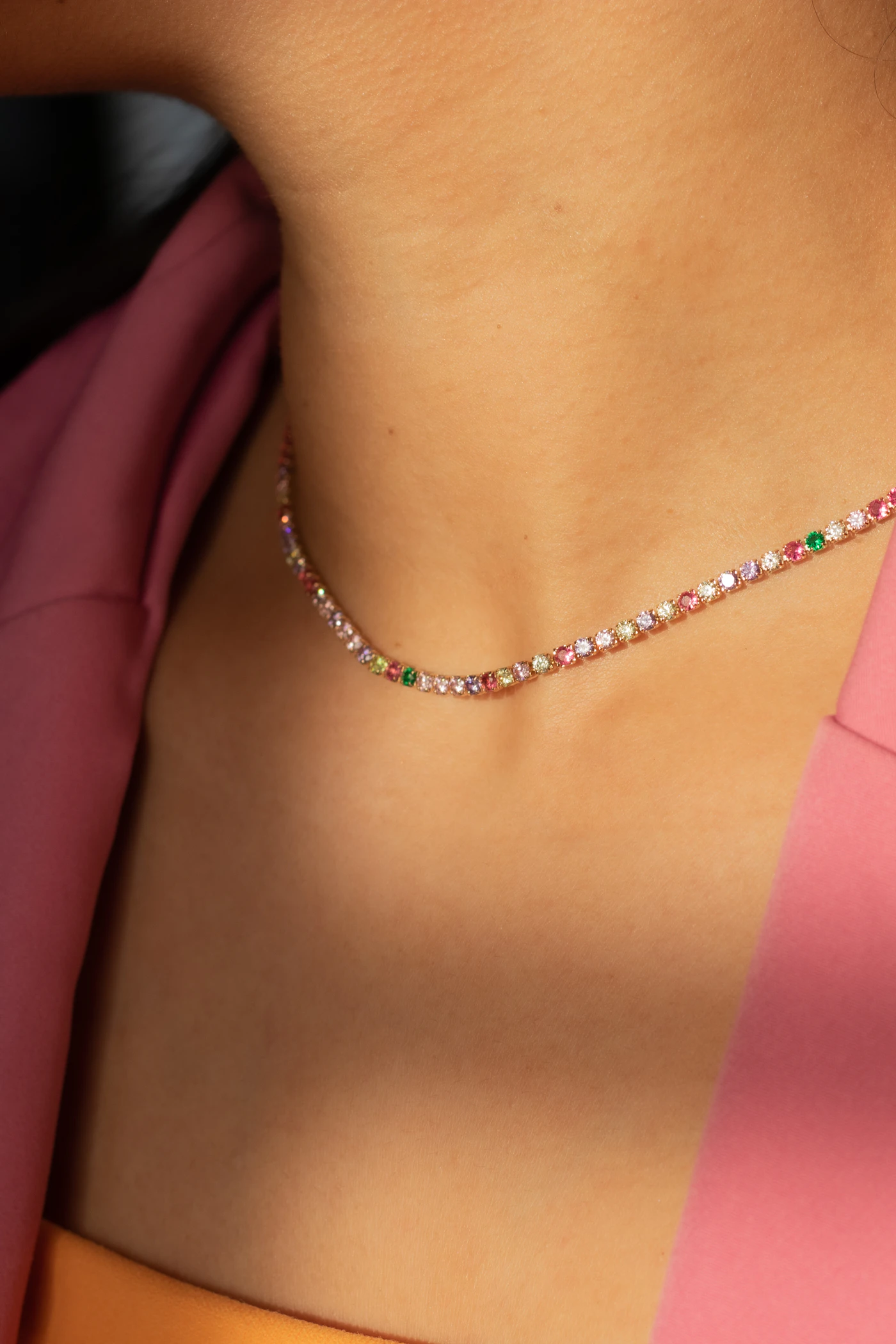
You put on a favourite silver-toned ring, reach for gold-toned earrings, and hesitate. The hesitation often comes from an inherited rule rather than anything wrong with the outfit. Mixed metals can look deliberate, relaxed, and useful, especially when a collection has grown through gifts and purchases over time.
There is no technical styling requirement to make every colour agree. Instead, look at the outfit as a whole. Repetition, spacing, and scale usually have more influence on whether a combination feels settled than the presence of two different metal colours.
Start with one familiar piece
Choose the piece you most want to wear and build around it. That might be an inherited ring, a watch, or a new pair of hoops. Give it a supporting piece in another colour rather than trying to introduce every finish in your collection at once. A clear starting point makes experimentation easier to assess.
If the combination feels abrupt, repeat the second colour elsewhere. Silver-toned earrings and a silver-toned ring can frame a gold-toned necklace without requiring equal quantities. You are creating a small visual conversation, not calculating a precise ratio of surface area.
Use shape as a connecting thread
A rounded hoop and a rounded pendant may feel related even when their colours differ. Equally, a brushed finish or a similarly substantial scale can connect pieces from different makers. Choose one relationship to emphasise; attempting to match colour, texture, size, and geometry simultaneously can make the process needlessly restrictive.
When two pieces compete, consider whether scale is the actual issue. A delicate chain can disappear next to a very large earring regardless of metal colour. Removing or replacing one element may solve the outfit more effectively than making the metals identical.
Decide where contrast should happen
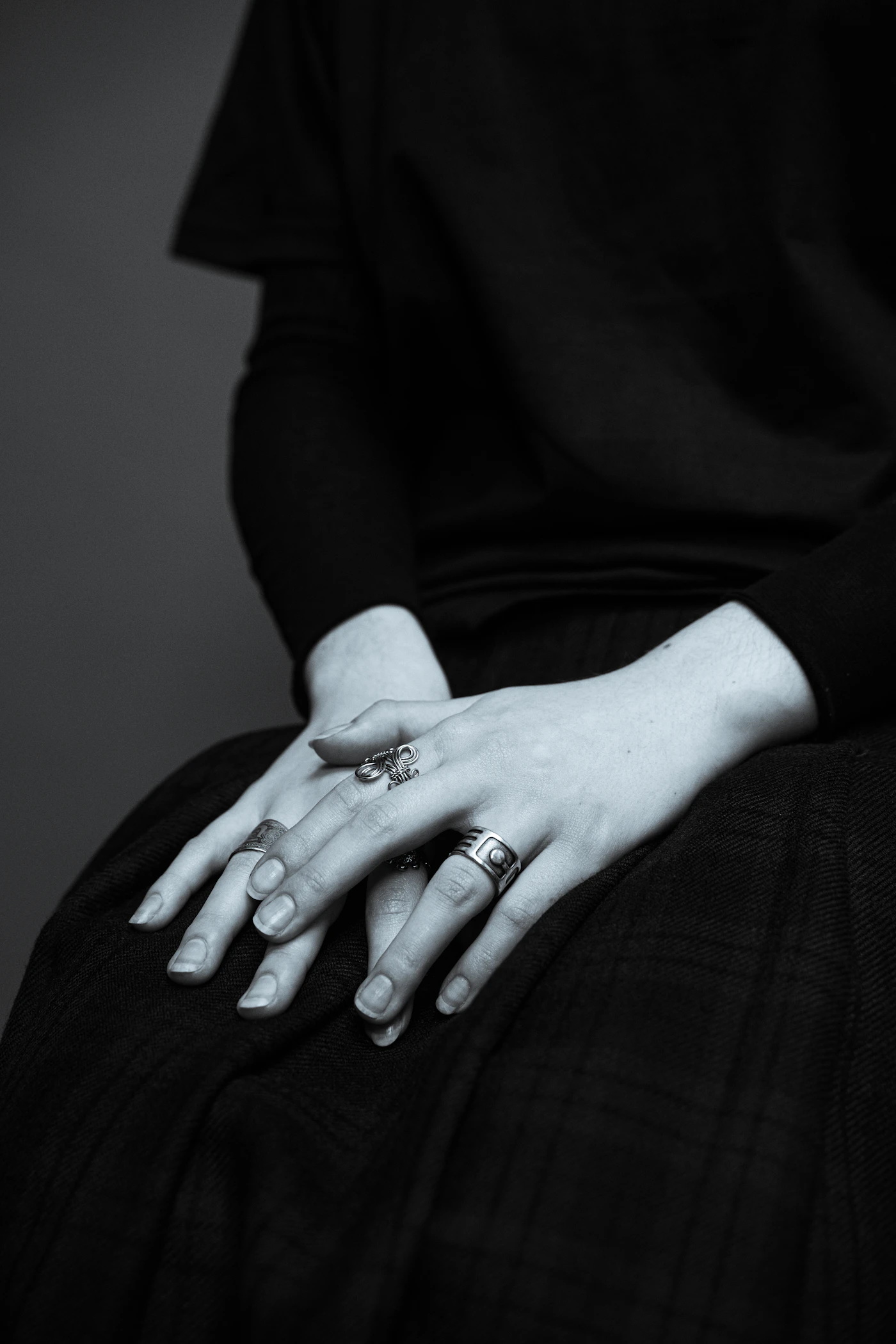
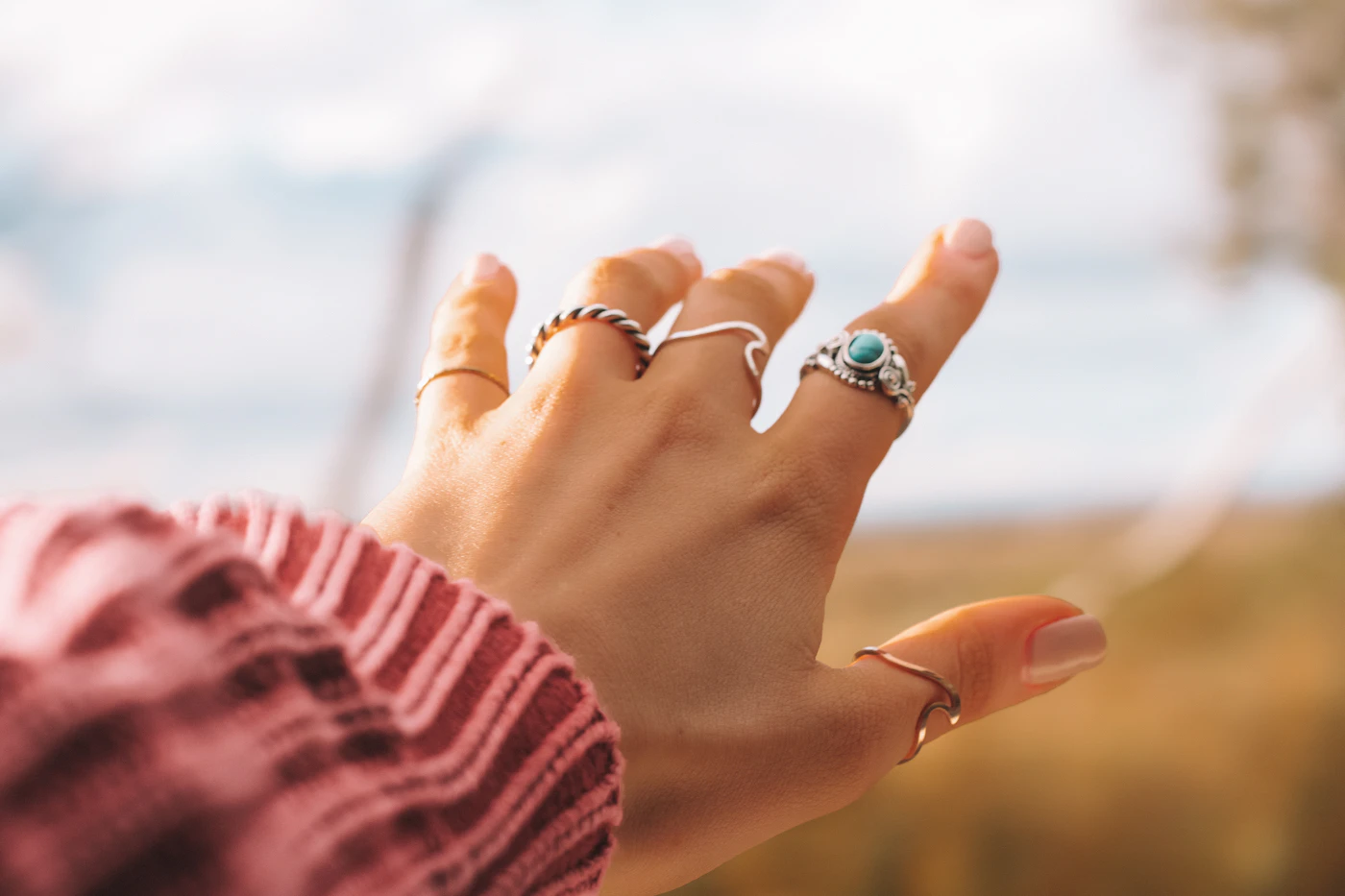
Mixed rings make contrast visible in one place, while different colours at the ears and neck create a quieter distribution. Start with the arrangement that suits your comfort with contrast. A single two-tone piece can also act as a bridge, but you do not need to buy one to justify wearing what you already have.
Give pieces physical space where necessary. Rings that feel pleasant alone may crowd neighbouring fingers, and bracelets can rub against one another or a watch. Visual compatibility does not guarantee a comfortable combination. Test ordinary movements before committing to a full day.
Consider clothing as part of the palette
A plain white shirt can make metal differences feel crisp, while a patterned blouse already carries several points of interest. Neither demands a particular metal. Instead, decide how much you want jewellery to contribute. With a busy neckline, mixed rings or earrings may make a clearer statement than layered necklaces.
Try the same combination with two familiar outfits and view it in daylight. Indoor lighting and phone processing can change how warm or cool finishes appear. Your judgement should come from the combination you actually see and enjoy rather than an expectation created by a heavily styled product photograph.
Buy a bridge only when it fills a real gap
If you decide to add something, define its job. Perhaps a silver-toned hoop would connect a watch to the earrings you prefer, or a broad gold-toned ring would balance an existing necklace. Search by that function, then compare dimensions and the full material description. Colour language alone does not explain what a piece is made from.
Look at the merchants below for ideas, but resist collecting a duplicate in every finish before testing your current options. Place the likely purchase beside photographs of your own jewellery. If the new piece only solves a rule you no longer believe in, keep the money for something you actually want to wear.
Find your best fit
| Consider | Best for | The tradeoff |
|---|---|---|
| Contrast at ears and neck | A subtle first experiment | The relationship is less visible from a distance |
| Mixed rings | A concentrated, personal detail | Finger spacing and comfort need checking |
| One two-tone piece | A clear visual connection | Adds a purchase that may be unnecessary |
A more considered purchase
- Pick one piece as your starting point.
- Repeat a shape or finish you already like.
- Check the combination in natural light.
- Test movement where pieces touch.
Explore the possibilities
Use the criteria above to compare individual pieces. These links lead to retailer collections, not a tested product shortlist. Check current materials, measurements, availability and return terms before ordering.
Missoma
Browse current pieces and compare dimensions, finishes and styling options.
Astrid & Miyu
Explore the collection and review sizing, closures and individual care instructions.
Your questions, considered
Do I need equal amounts of both colours?+
No. One colour can dominate while another adds a small accent. If the result feels unbalanced, try repeating the accent once before adding several more pieces.
Can a wedding ring stay in the mix?+
Yes. A ring with personal meaning can remain a constant while the rest of your jewellery changes. You do not need to replace or hide it to follow a particular outfit palette.
What about bag buckles and buttons?+
Treat them as part of the whole outfit if you notice them, but they do not create an obligation to match. Usually the overall proportions matter more than coordinating every small piece of hardware.
The takeaway
Mixed metals become easier when you stop treating them as a test. Start with a favourite, repeat one visual detail, and judge the outfit by how it looks and feels on you.