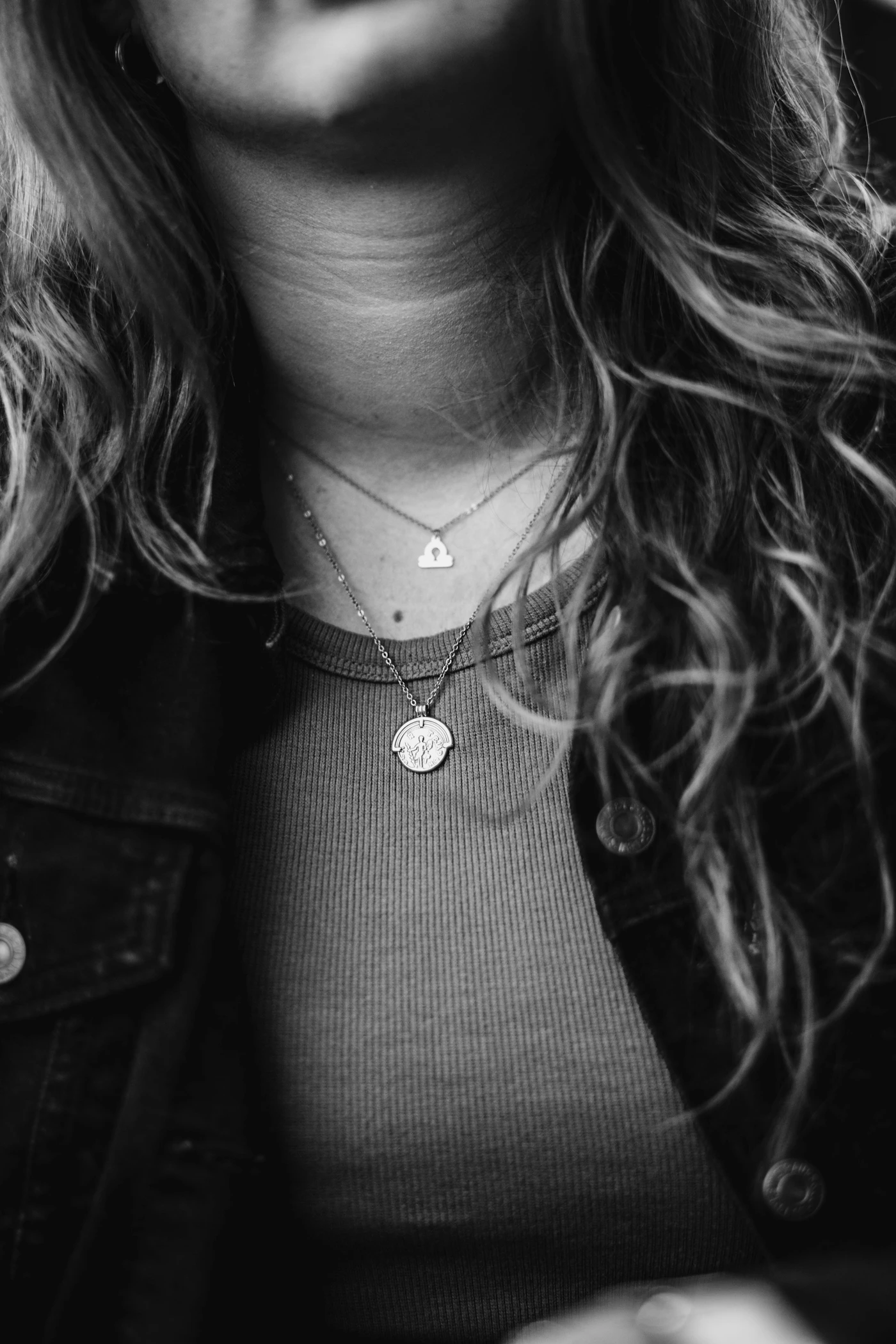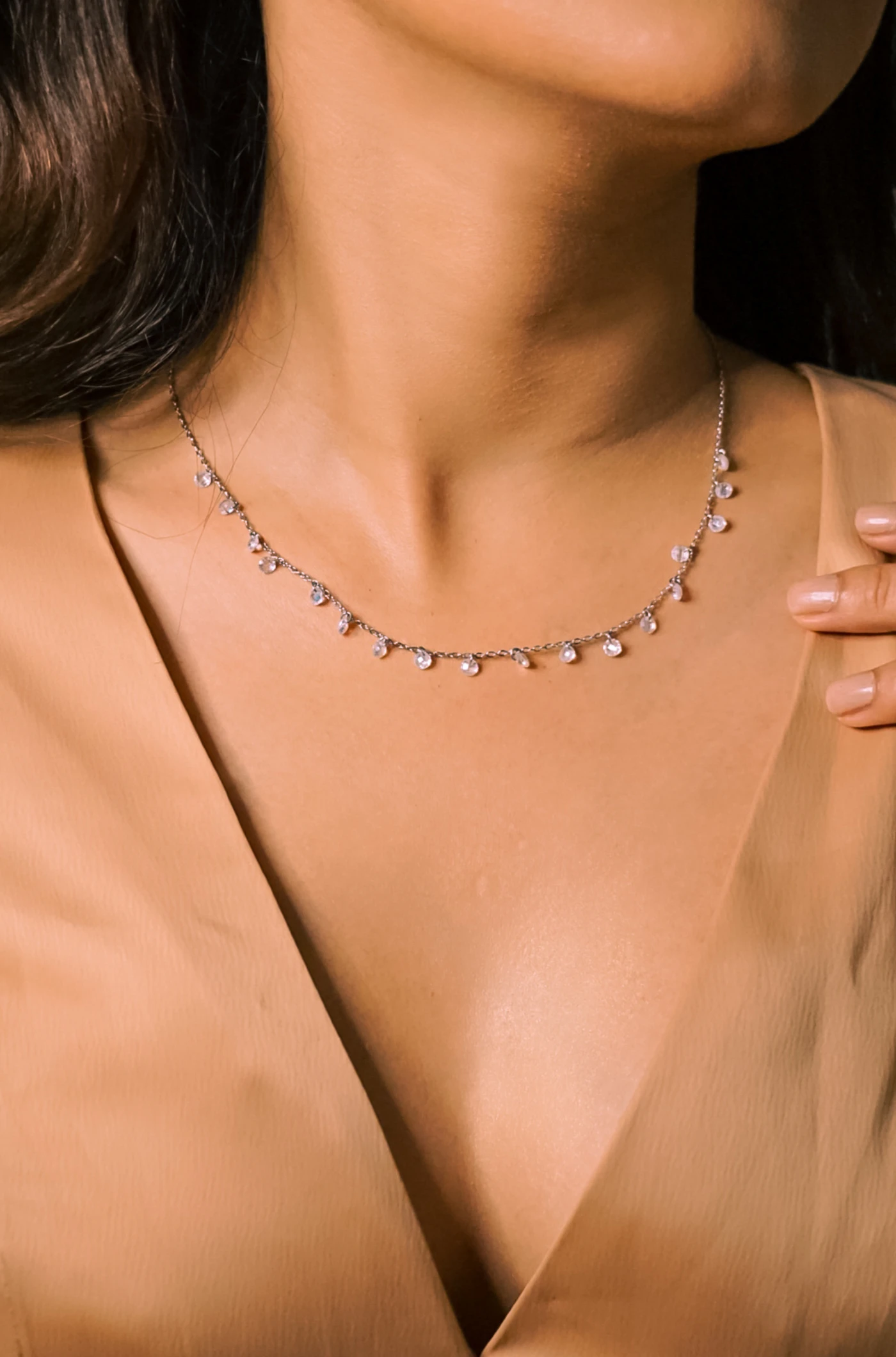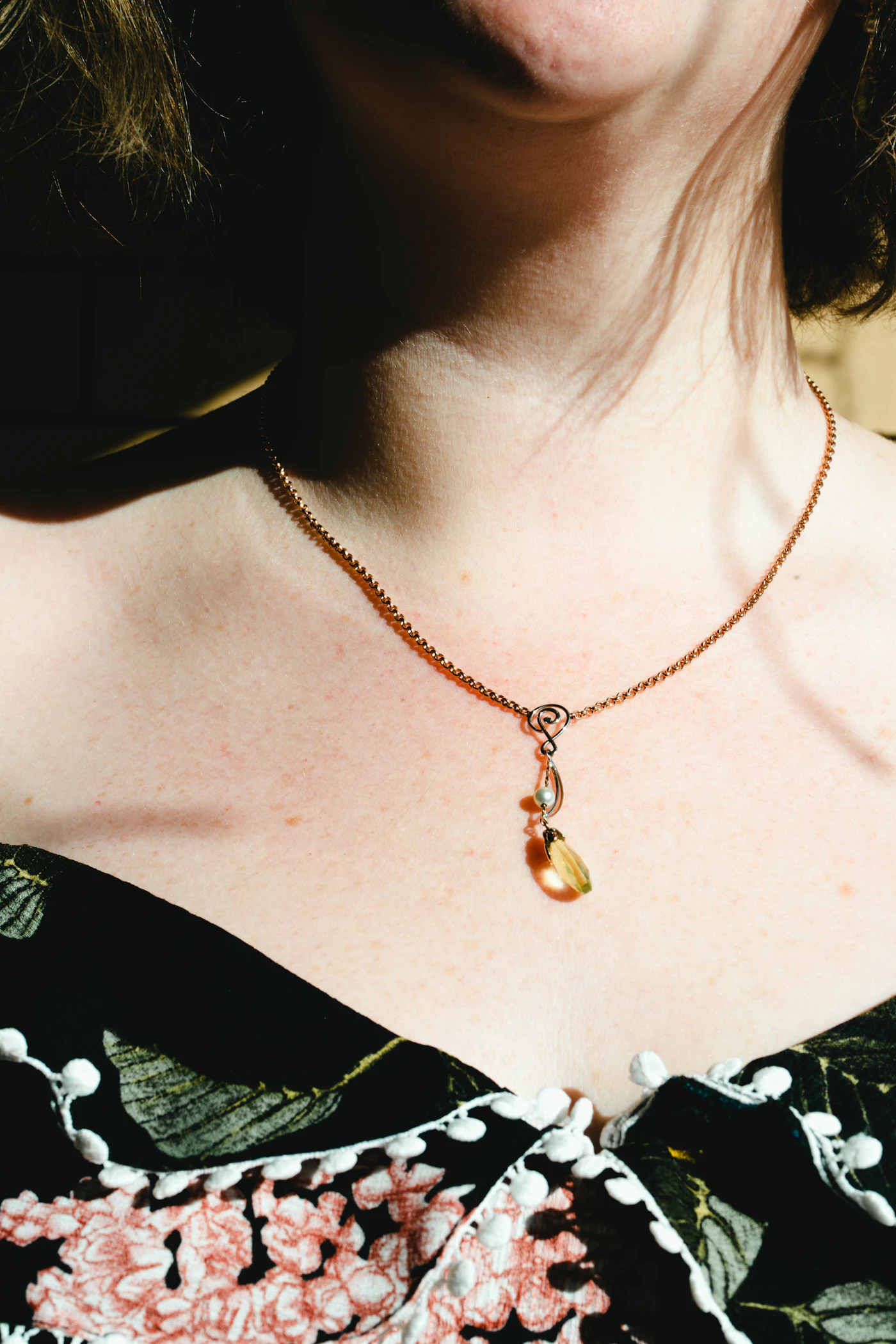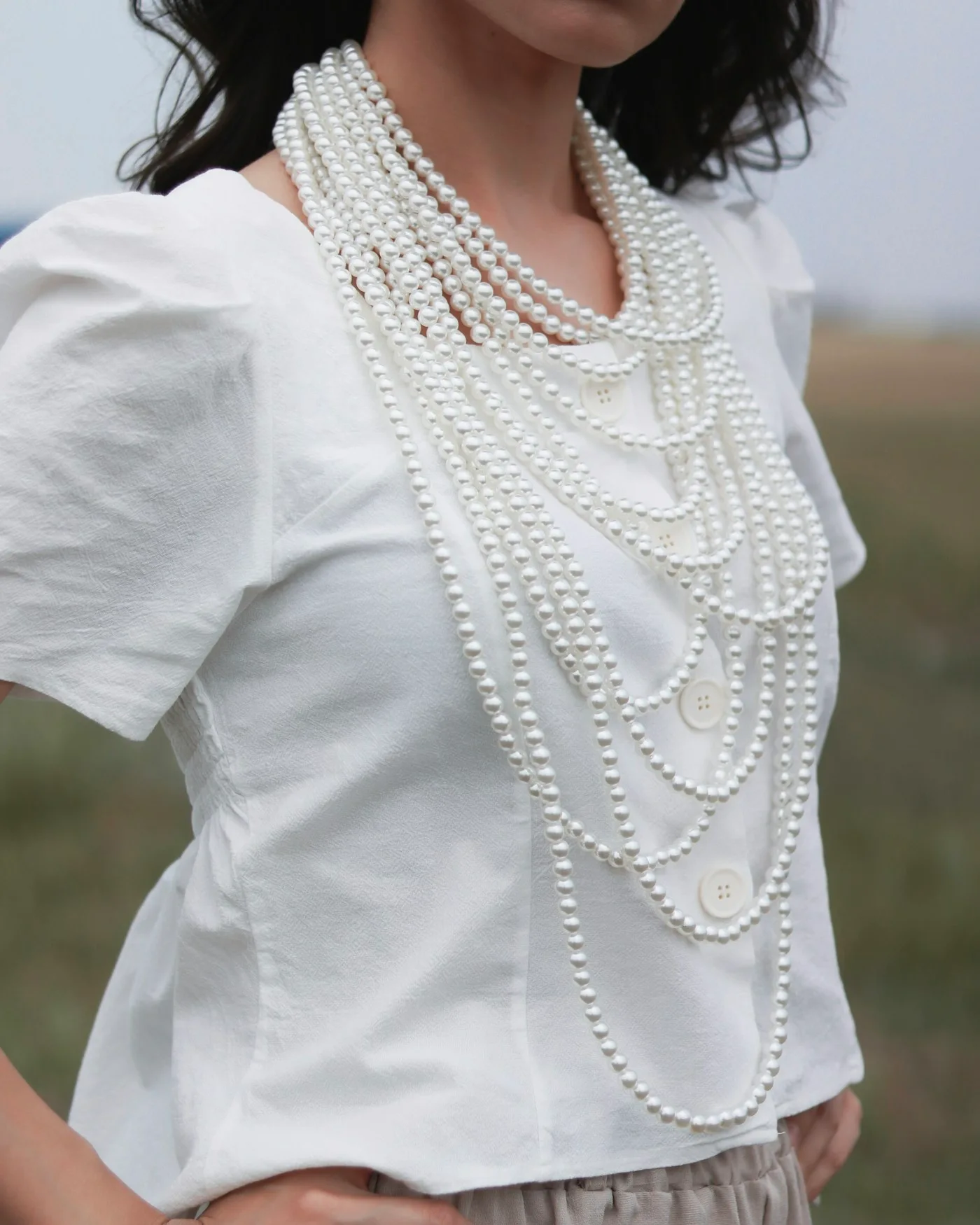
A pearl necklace can look at home with a cotton shirt, a plain knit, or an evening dress. The difference often comes from proportion and styling rather than a special category of casual pearls. If you have only imagined them with formal clothes, begin by trying a simpler outfit you already wear.
Buying a pearl necklace also involves more than colour and length. Ask what the pearls are, how the piece is constructed, and what care it requires before deciding whether it fits your everyday habits.
Choose the degree of uniformity you enjoy
A necklace of similarly shaped pearls creates a more regular rhythm, while varied shapes can make the outline feel less formal. Neither is automatically more personal or more useful. Look at several worn photographs and decide whether you prefer a consistent line or visible variation.
Product images may feature one example when individual pieces vary. Read the description and ask whether the delivered necklace will differ in shape, colour, or arrangement. Variation can be part of the appeal, but it should be understood before purchase rather than explained away after an unexpected delivery.
Find the right relationship to your neckline
A shorter necklace can sit inside an open collar, while a longer one may work over a plain top. Use measurements from a necklace you own as a reference. Pearl size and the overall structure can affect the visual presence, so compare more than the total length.
Try the intended outfit with and without other jewellery. Pearls may already provide enough texture near the face. A simple earring or ring can support the look without making it feel like a complete formal set. If you like a more coordinated effect, choose it deliberately rather than assuming pearls demand matching companions.
Understand what the listing is offering
Ask whether the product uses cultured pearls, natural pearls, imitation pearls, or another clearly described material. Do not infer this from a photograph or from the word pearl used loosely in a product title. Read the full specification and seek clarification when the wording is incomplete.
Check the clasp, any metal components, and the construction of the necklace. If it is strung, ask about maintenance and restringing support. If pearls are combined with a chain or pendant, understand how those parts are connected and whether the seller offers repairs. These practical questions matter for a piece you hope to wear often.
Make care part of the purchase decision
GIA advises protecting pearls from harsh chemicals and wiping them after wear with a soft cloth. Its pearl care guide also discusses cleaning and the care of strung necklaces. Read that guidance alongside the seller's instructions for the complete piece, since clasps, threads, and other components may need particular attention.
Build a simple routine you will actually follow. Put the necklace on after getting ready, give it a consistent storage place, and do not assume that care advice for a plain metal chain also suits pearls. If a necklace needs more attention than you want to give, choose a different everyday design rather than ignoring the mismatch.
Try an ordinary outfit before buying an occasion
Style pearls with a shirt you wear to lunch or a knit you reach for on weekends. Roll a sleeve, leave the collar relaxed, and use familiar shoes. You are testing whether the necklace belongs in your wardrobe, not constructing an entirely new personality around it.
Browse the merchants below for different pearl proportions and combinations, then compare the detailed descriptions. Avoid treating an unusually low or high price as proof of a particular quality. Ask what distinguishes the piece, check returns, and decide whether its appearance, construction, and care expectations justify the purchase for your intended use.
Find your best fit
| Consider | Best for | The tradeoff |
|---|---|---|
| Regular pearl strand | A clear, consistent outline | May feel more formal with matching pieces |
| Varied pearl shapes | A less uniform visual rhythm | Individual necklaces may differ from photographs |
| Pearl and chain combination | Linking pearls to an existing chain collection | Mixed components need suitable care |
A more considered purchase
- Confirm the pearl type in the full description.
- Compare pearl size and necklace length.
- Ask about construction and maintenance.
- Try the idea with an ordinary outfit first.
Explore the possibilities
Use the criteria above to compare individual pieces. These links lead to retailer collections, not a tested product shortlist. Check current materials, measurements, availability and return terms before ordering.
Monica Vinader
Browse current jewellery and read the details and terms for your chosen piece.
Mejuri
Explore the current jewellery collection and check material details on each listing.
Your questions, considered
Can pearls work with a T-shirt?+
Yes. A plain neckline can provide a simple backdrop, and the contrast may be exactly what you enjoy. Check where the necklace lands so it does not repeatedly disappear behind the collar.
Do irregular shapes mean a necklace is poor quality?+
Shape alone is not a complete quality assessment. Decide whether the variation is intentional and accurately described, then consider the overall appearance, construction, and information provided by the seller.
Should I use my usual jewellery cleaner?+
Do not assume it is suitable. Check the pearl care guidance and the seller's instructions for the complete necklace before using a product or cleaning method.
The takeaway
Pearls can become part of ordinary dressing when their proportions and care needs fit your life. Choose the necklace you enjoy with familiar clothes, and understand the piece behind the photograph.
Further reading & sources
Material and care references checked September 7, 2026. Styling recommendations reflect our editorial judgment.