Two necklaces look balanced in your hand, but by lunchtime their pendants have found the same spot and the chains have twisted together. Layering is partly a styling exercise and partly a question of how separate pieces move. A good combination needs to make sense on your body and with your clothes.
Start with two necklaces rather than a full arrangement copied from a photograph. You can see their relationship more clearly, test how they behave, and add a third only if it gives the outfit something useful.
Give each necklace a distinct position
Put on the necklace you most want to wear first. Then choose a second that sits clearly above or below it with your intended neckline. The useful gap depends on your body, the chain shapes, and any pendants; a standard difference in listed length does not guarantee the same spacing on everyone.
Measure necklaces you already like and note where they sit. If a chain has an extender, check its actual range rather than assuming it provides enough flexibility. Try the combination while standing and sitting, since clothing and posture can change how the lower necklace falls.
Create contrast that is easy to read
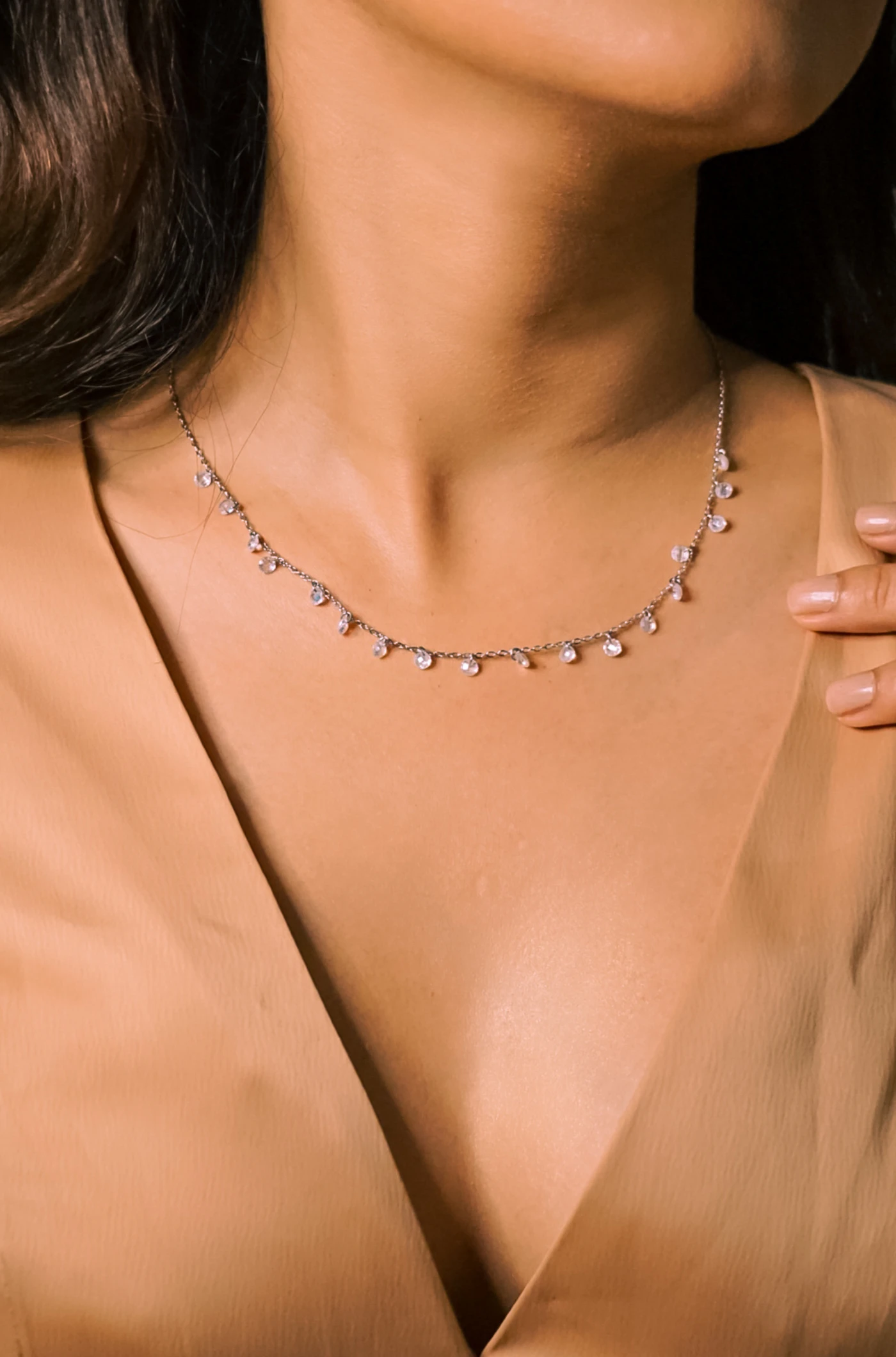
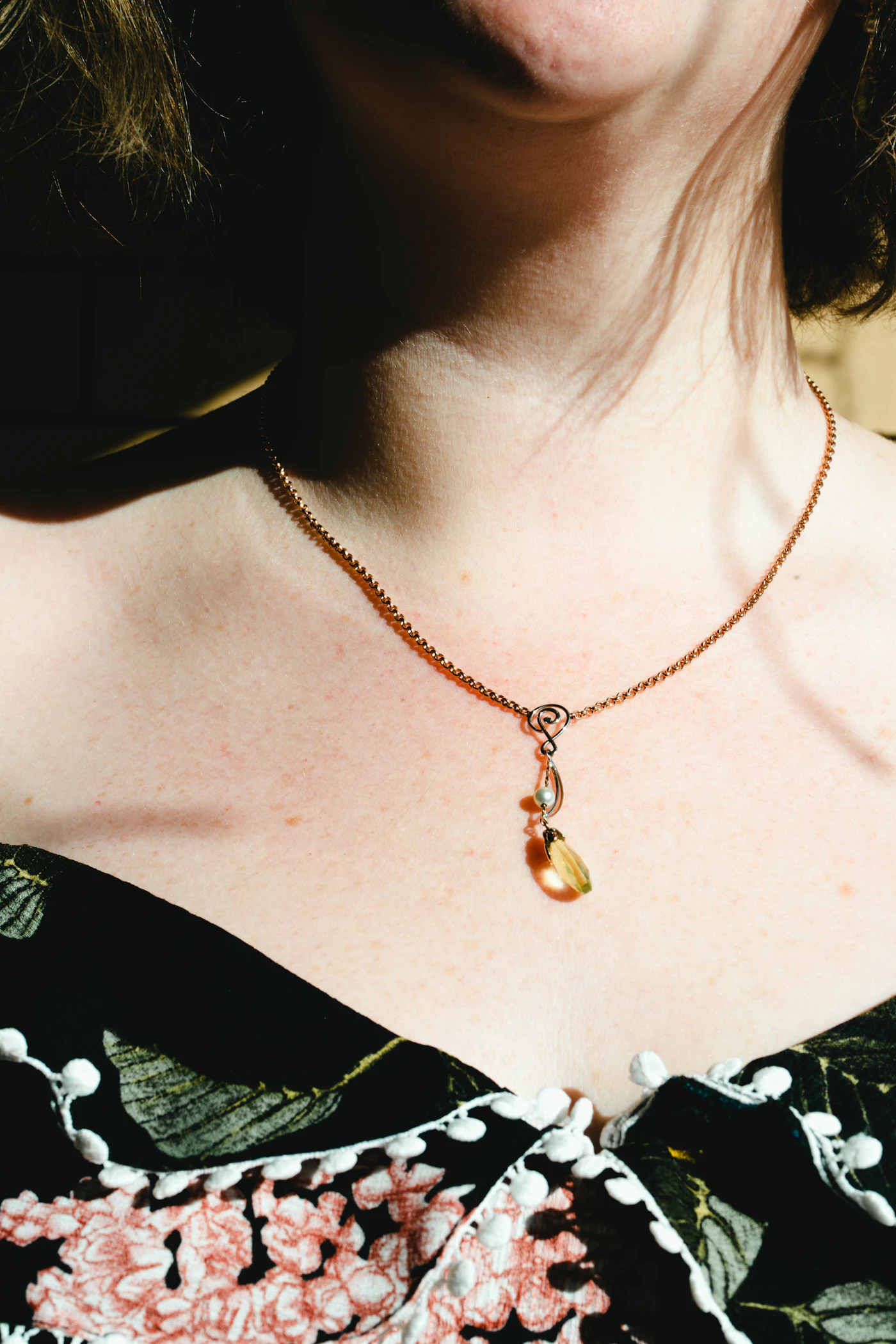
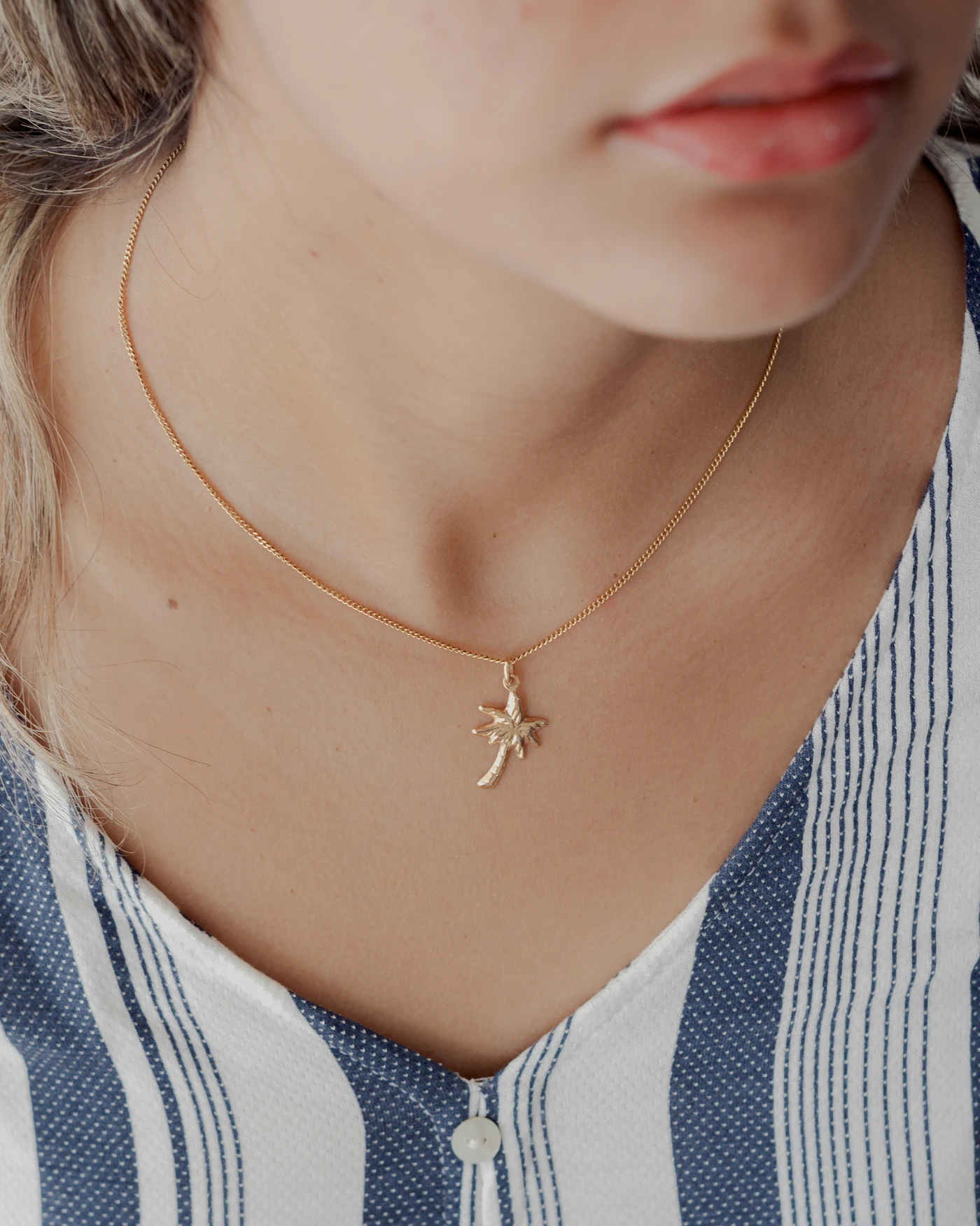
A fine chain above a more visible pendant offers a clear division of roles. Two nearly identical chains can also work, but may look like an accidental overlap when their lengths are too close. Choose one difference to emphasise: link scale, pendant presence, or metal colour.
Avoid making every piece the focal point at once. If the bottom necklace has a prominent charm, the upper one can establish a quieter line. If a substantial chain is the main feature, a small supporting pendant should have enough space to remain visible rather than disappearing into the links.
Test movement before calling the combination finished
Walk around, bend to pick something up, and put on your usual jacket. Notice whether pendants turn, chains cross, or clasps migrate to the front. Some adjustment is normal, but a combination that needs constant intervention may be better worn separately.
There is no styling trick that guarantees chains will never tangle. Different lengths and profiles may help a particular pairing, but movement and construction still matter. Treat the try-on as an experiment. If the arrangement repeatedly twists, simplify it rather than buying another accessory solely because it promises a universal solution.
Let the neckline frame the arrangement
With an open shirt, decide whether the necklaces should sit within the opening or extend below it. With a crew neck, check whether the upper chain disappears behind the fabric. A layered combination that looks good against bare skin can lose its separation when one part meets a collar edge.
Try the necklaces with the garment you plan to wear, not just a neutral vest. Fine chains may sit differently over knitwear, and pendants can catch on textures or decorative seams. If the clothes already have a busy neckline, moving your jewellery emphasis to earrings may be a simpler styling choice.
Shop for the missing length or role
Before browsing, write down the gap: a shorter plain chain, a longer pendant, or a more substantial upper layer. This prevents another attractive necklace from occupying the exact position already covered by your collection. Compare complete lengths, extender ranges, clasp sizes, and pendant dimensions.
Use the merchants below to investigate candidates, checking material descriptions and care guidance for each piece. Do not assume two necklaces from the same collection will layer well without comparing measurements. If you buy a set, assess whether you would also enjoy wearing the components separately; that gives the purchase more ways to earn its place.
Find your best fit
| Consider | Best for | The tradeoff |
|---|---|---|
| Fine chain plus pendant | A clear two-piece arrangement | The pendant can still travel or turn |
| Two contrasting chains | Interest without a pendant | Similar lengths may blur the distinction |
| Three separated layers | A more expressive open neckline | More movement and adjustment to manage |
A more considered purchase
- Begin with two pieces and one focal point.
- Check actual lengths and extender ranges.
- Try the arrangement with the intended top.
- Walk and sit before judging the fit.
Explore the possibilities
Use the criteria above to compare individual pieces. These links lead to retailer collections, not a tested product shortlist. Check current materials, measurements, availability and return terms before ordering.
Missoma
Browse current pieces and compare dimensions, finishes and styling options.
Mejuri
Explore the current jewellery collection and check material details on each listing.
Your questions, considered
How far apart should layered necklaces sit?+
Far enough that each has a clear position with your body and neckline. Start by comparing pieces you own, then adjust visually. A fixed numerical gap is less reliable than seeing the combination on you.
Can I layer different metal colours?+
Yes. A deliberate contrast can help separate the pieces visually. Repeating a shape or giving one necklace a clear leading role can make the arrangement feel coherent without an exact colour match.
The takeaway
Layering works best when each necklace has a job and a little space. Build around one favourite, test the movement, and buy only when you know which length or visual role is missing.