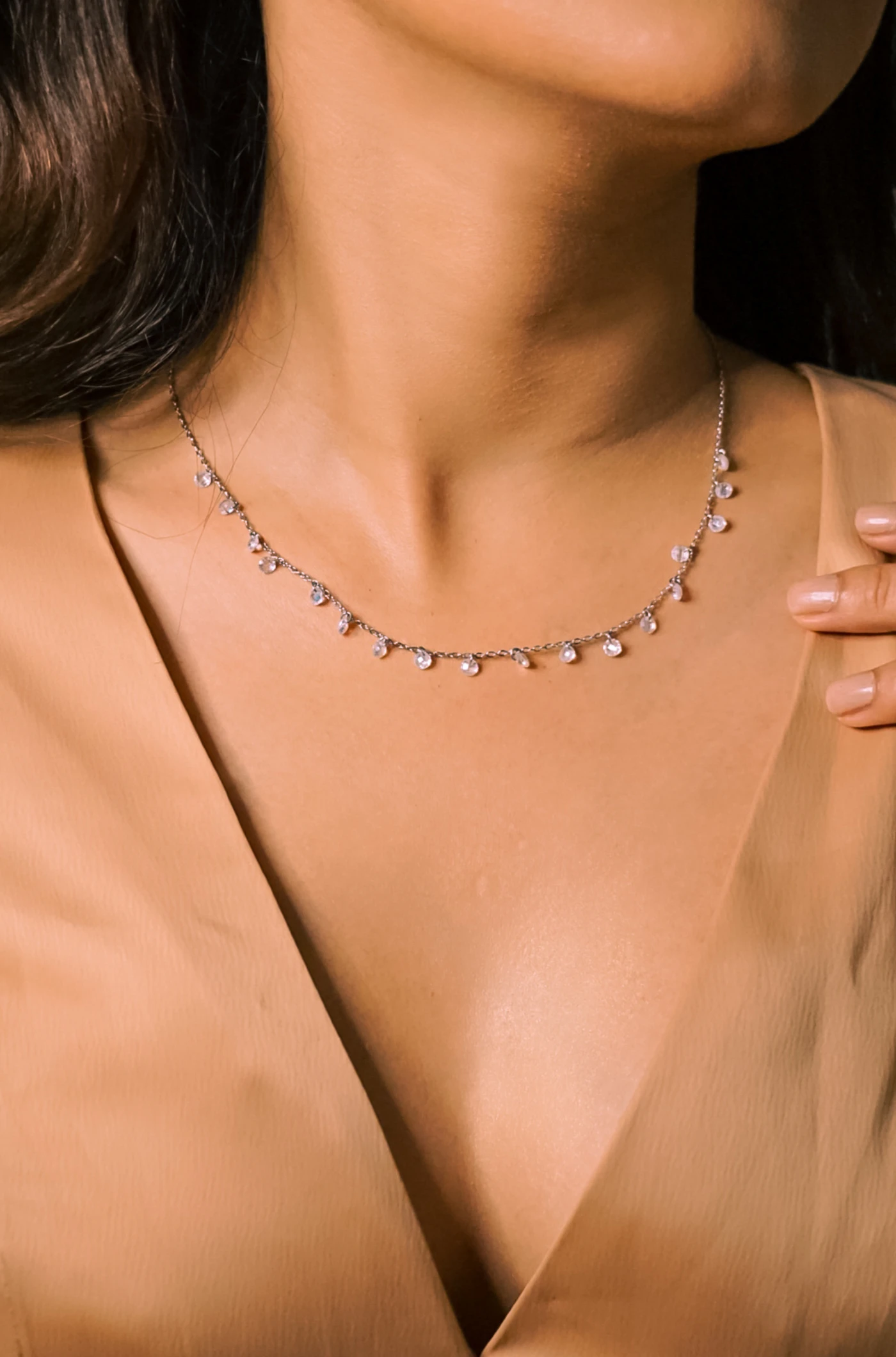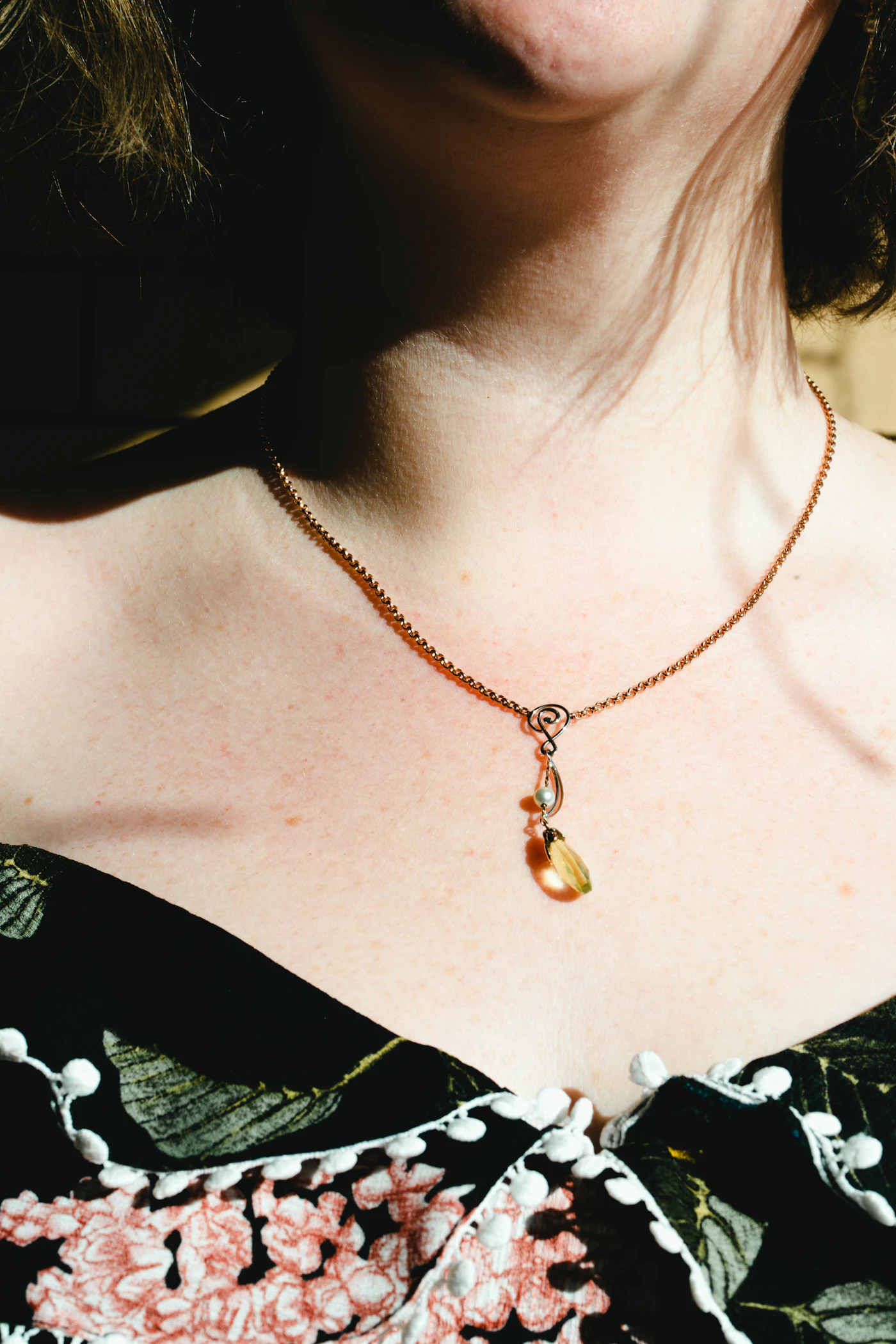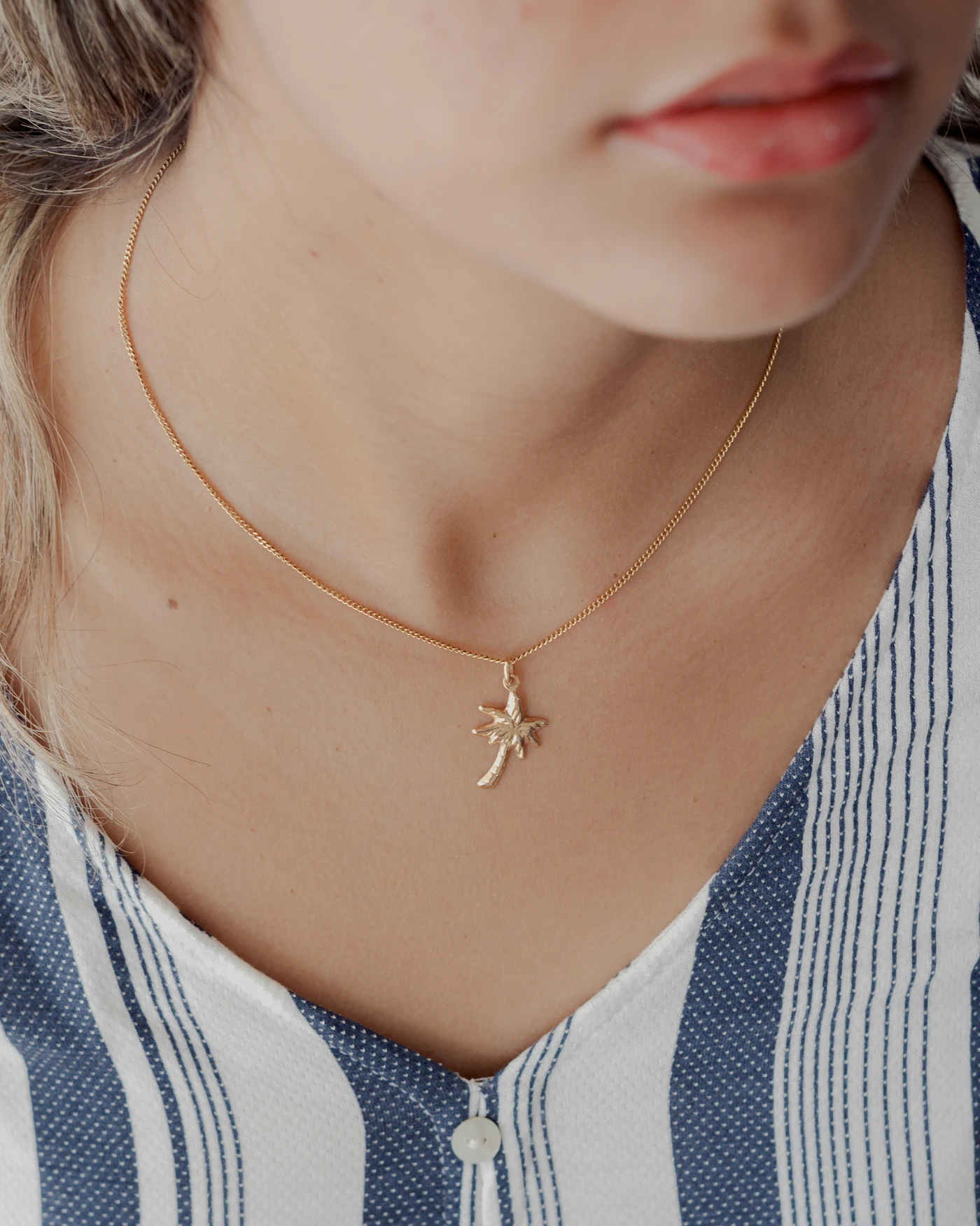
You want a simple chain, but the search opens into dozens of names and near-identical photographs. The choice becomes easier when you focus on visible structure and intended use. Are you looking for a fine background line, a substantial necklace that stands alone, or a chain to carry a pendant?
Start there before narrowing by a style name. The most useful chain is the one whose scale, length, clasp, and construction support the way you plan to wear it.
Choose the chain's job
A fine chain worn alone creates a different effect from a broad chain used as the main detail. A chain intended for a pendant has another practical role. Decide which use matters most, because trying to cover all three with one purchase can create compromises you do not actually need.
If you already own several pendants, check their compatibility rather than assuming a new chain will serve them all. Ask the seller about appropriate combinations. The chain's dimensions, opening hardware, and suitability for the pendant's weight are part of the decision, not details to discover after ordering.
Compare link scale in real measurements
A close-up can make fine links appear substantial, while a distant model image can conceal texture. Look for width measurements and photographs that show the chain on a person. Compare those figures with a necklace you own so you can distinguish a subtle line from a visibly linked silhouette.
Pay attention to how open or closely connected the links appear. This affects the visual density even when two chains have a similar width. A more open structure can show the fabric beneath, while a dense outline may read as a continuous band. Choose the effect that works with your most common tops.
Notice how the chain lies
A product photograph may arrange a chain perfectly flat, but your body and clothing introduce movement. Look for worn views and check whether the design is described as needing particular handling. On arrival, try it with your intended neckline and observe whether it turns or catches during ordinary movement.
Do not bend or twist an unfamiliar chain to test its limits. Follow the seller's care and storage guidance. If a construction looks especially rigid or flat and the listing offers little practical information, ask how it should be handled and whether repair services are available before buying.
Evaluate the clasp and length together
A necklace can be the right length yet awkward to fasten. Check the clasp size, whether there is an extender, and whether you can distinguish the fastening components easily. If you regularly change lengths, the adjustment should be manageable rather than something you avoid using.
Consider whether the clasp tends to become visible in the intended styling. Some designs make it part of the appearance; others aim to keep it at the back. Look at all product views and decide whether you are comfortable with the necklace from different angles, not just the carefully arranged front.
Read materials without relying on colour
A gold-coloured photograph does not tell you the chain's composition. Look for a complete description of the metal and any surface coating. The FTC's consumer guidance distinguishes gold, gold-plated, and other precious-metal descriptions, which is useful context when comparing listings with similar appearances.
Browse the merchants below with a consistent checklist of width, length, material, closure, and aftercare. If one listing leaves a key detail unanswered, ask rather than treating a familiar style name as a guarantee. A simple chain has few distractions, so the quality of the information behind it matters as much as the initial image.
Find your best fit
| Consider | Best for | The tradeoff |
|---|---|---|
| Fine chain worn alone | A quiet line with simple necklines | Small links may be less visible over textured fabric |
| Broader linked chain | One strong necklace without a pendant | Scale can compete with decorative collars |
| Chain selected for a pendant | A specific existing charm | Compatibility needs individual checking |
A more considered purchase
- Define whether the chain stands alone or carries a pendant.
- Compare width as well as length.
- Check the closure and adjustment range.
- Read the full metal and coating description.
Explore the possibilities
Use the criteria above to compare individual pieces. These links lead to retailer collections, not a tested product shortlist. Check current materials, measurements, availability and return terms before ordering.
Mejuri
Explore the current jewellery collection and check material details on each listing.
Missoma
Browse current pieces and compare dimensions, finishes and styling options.
Your questions, considered
Does a chain style name tell me everything I need?+
No. Different products with the same style name can vary in dimensions, construction, material, and fastening. Compare the actual specifications rather than assuming a shared name means an identical wearing experience.
Is a thicker chain always the better purchase?+
Not necessarily. It may suit a bolder visual role, but comfort, construction, intended use, and personal taste matter. Choose the scale that serves your wardrobe rather than treating thickness as a universal measure of value.
The takeaway
Choose a chain by the role it will play, then compare the measurable details. A clear silhouette, useful length, and understandable material description make a stronger foundation than a style name alone.
Further reading & sources
Material and care references checked September 7, 2026. Styling recommendations reflect our editorial judgment.