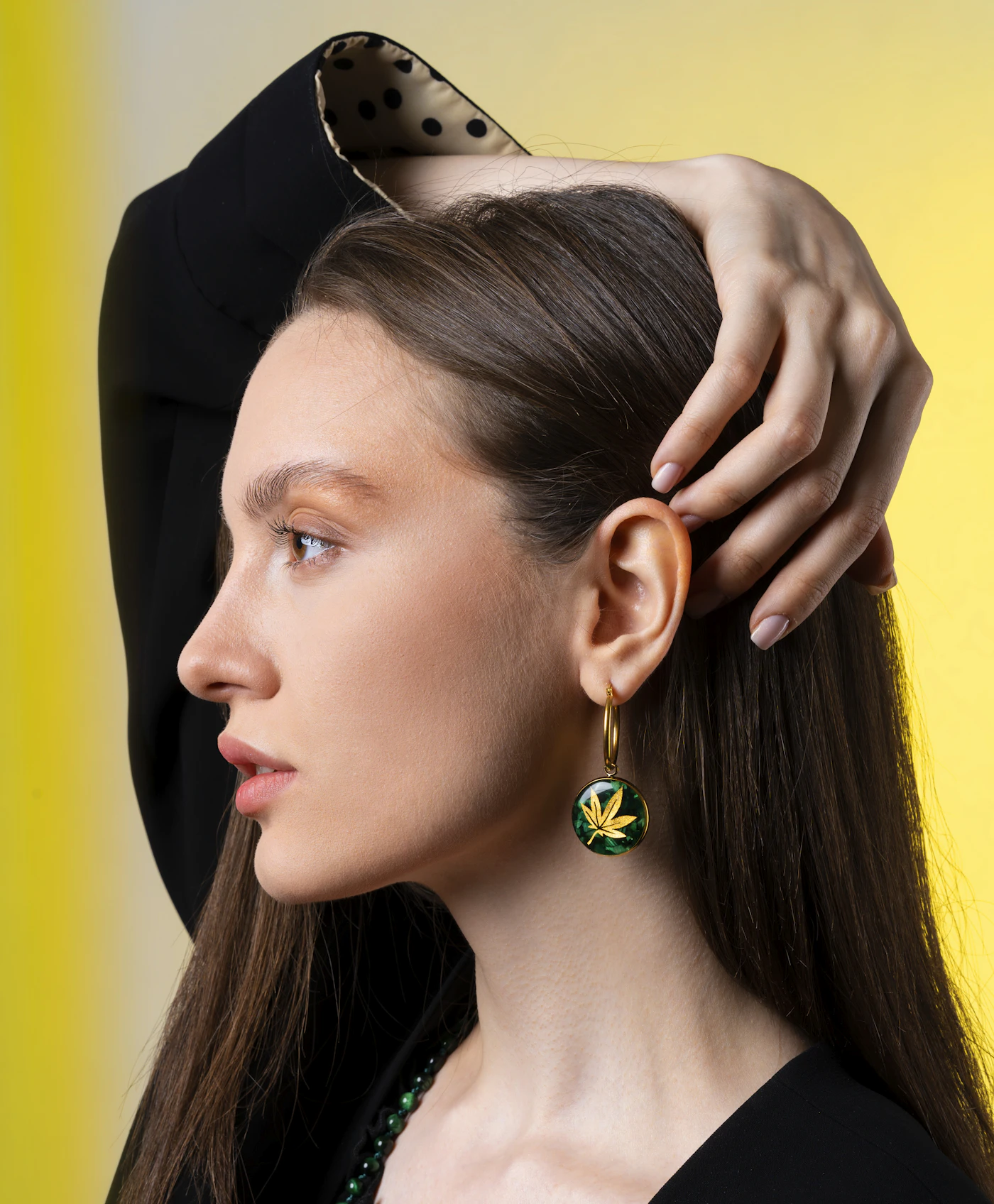
The photograph shows a beautiful earring front, but almost nothing behind it. That missing view can hide the detail that determines whether the pair becomes a daily favourite or stays in its box. A fastening has to work with your hands, your routine, and the way the earring sits.
You do not need to memorise every closure name before shopping. You do need enough information to understand how a piece opens, how it secures, and what you will handle each time you put it on.
Ask for the view the photograph leaves out
Look for images of the back and side, not just a styled front view. A stud may use a separate back, while a hoop may incorporate a hinge or another fastening arrangement. Product terminology varies, so a clear image or demonstration can be more informative than a short label.
Check whether posts, backs, and decorative fronts have their materials described separately. Do not assume every component has the same composition because the main design uses one material. If a specific component matters to you, ask the seller to confirm it in writing before purchasing.
Think about your hands and dressing space
Some people prefer a separate back they can see and hold; others find a hinged hoop easier. Consider your dexterity, lighting, mirror position, and whether you usually dress in a hurry. The best mechanism is one you can operate correctly and consistently, not necessarily the one that sounds most sophisticated.
Small removable parts need somewhere safe to land. Fasten earrings over a clear surface rather than an open sink, and keep components together when you remove them. If this routine sounds inconvenient, a style with fewer separate parts may suit you better, provided the fit and fastening are comfortable.
Check comfort beyond the visible front
The back can meet headphones, a hat, or the area behind your ear. A secure-looking fastening can still feel awkward in your specific routine. Try the piece with the items you use most often and look at how far it projects from the side.
Do not alter a post, bend a hinge, or force a closure to solve an unfamiliar fit problem. Follow the manufacturer's directions and contact the seller if something appears misaligned. A new purchase should arrive functioning as described; an attractive design does not make a questionable fastening acceptable.
Understand what happens if a component is lost
Ask whether replacement backs or other parts are available for the exact design. Generic-looking components are not automatically interchangeable. A replacement may need to match a particular post or mechanism, and availability can affect how useful the earrings remain over time.
Keep the product name, receipt, and any care instructions somewhere accessible. If a fastening becomes loose or inconsistent later, those details make a repair enquiry easier. Do not rely on remembering a collection name from a social media photograph months after the purchase.
Compare information as carefully as appearance
Build a shortlist that includes closure type, materials, dimensions, and any stated weight. Record unanswered questions rather than filling them with assumptions. A seller who provides clear specifications helps you make a better decision, even when two pairs initially look similar.
The merchants below are starting points for browsing, not a substitute for checking each product. Confirm whether earrings are sold singly or in pairs, read the current return policy, and understand any restrictions before trying them. If a fastening is central to your decision, resolve that question before placing the order rather than hoping the delivered item will suit.
Find your best fit
| Consider | Best for | The tradeoff |
|---|---|---|
| Stud with a removable back | People who prefer separate visible components | Small parts need careful handling |
| Hinged hoop | A design with fewer loose pieces | Alignment and opening action must suit you |
| Other documented closure | A specific shape or personal preference | Requires clear instructions and component details |
A more considered purchase
- Find a back or side photograph.
- Ask how the mechanism operates.
- Check materials for posts and backs.
- Confirm replacement-part and return information.
Explore the possibilities
Use the criteria above to compare individual pieces. These links lead to retailer collections, not a tested product shortlist. Check current materials, measurements, availability and return terms before ordering.
Mejuri
Explore the current jewellery collection and check material details on each listing.
Monica Vinader
Browse current jewellery and read the details and terms for your chosen piece.
Your questions, considered
Does a particular closure guarantee security?+
No closure label alone can establish that. Correct function, fit, condition, and use all matter. Inspect a new pair, follow its instructions, and ask the seller to address anything that does not work as described.
Can I use backs from another pair?+
Do not assume compatibility. Check the manufacturer's guidance or ask a jeweller to assess the parts, particularly when a design uses a specific mechanism.
What if the earring is lovely but difficult to fasten?+
Treat that as a meaningful drawback. If you cannot comfortably operate it after following the instructions, another closure may be a better everyday choice.
The takeaway
The back of an earring deserves a place in the buying decision. Choose a closure you understand and can use comfortably, with clear support if a component needs attention later.