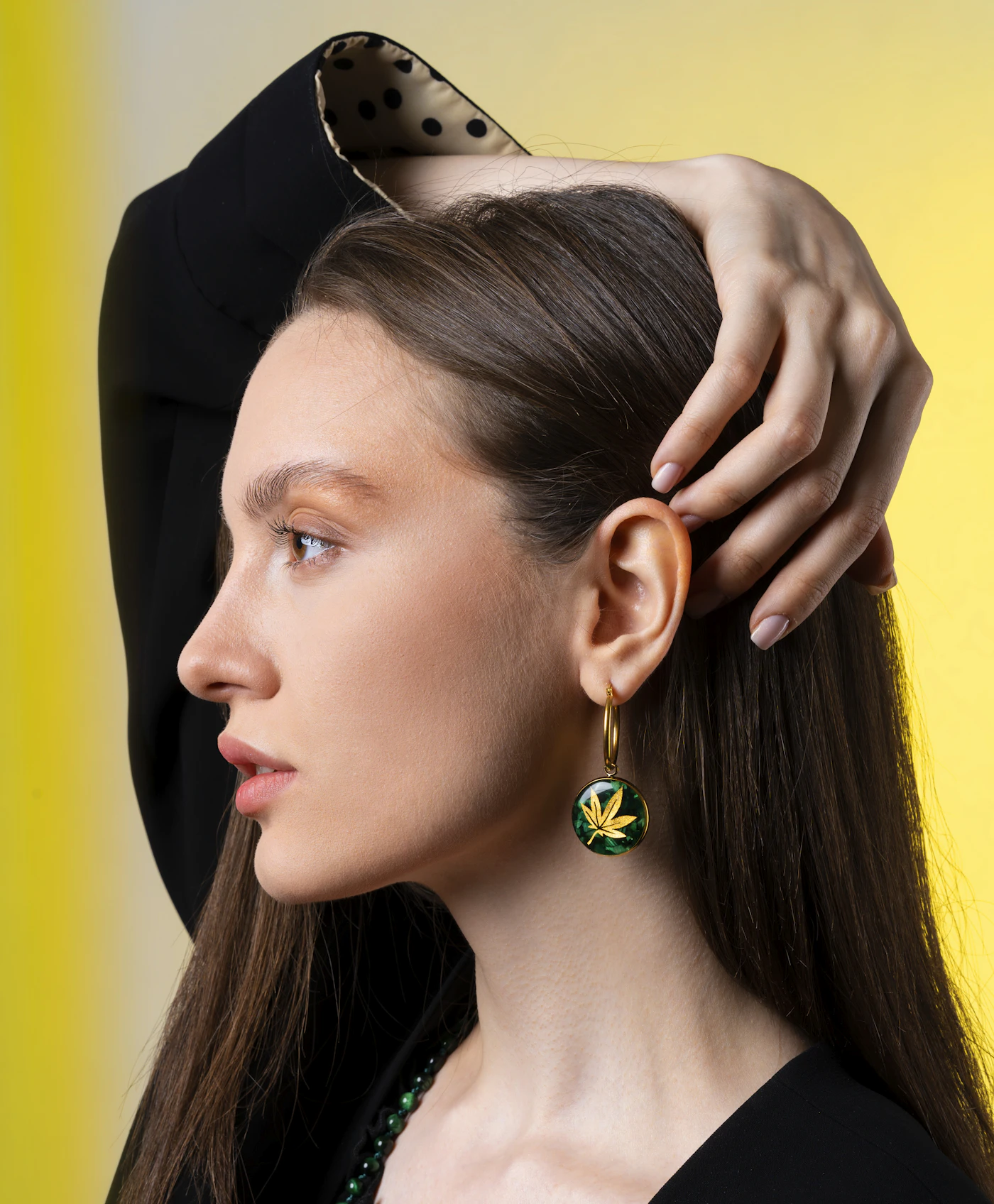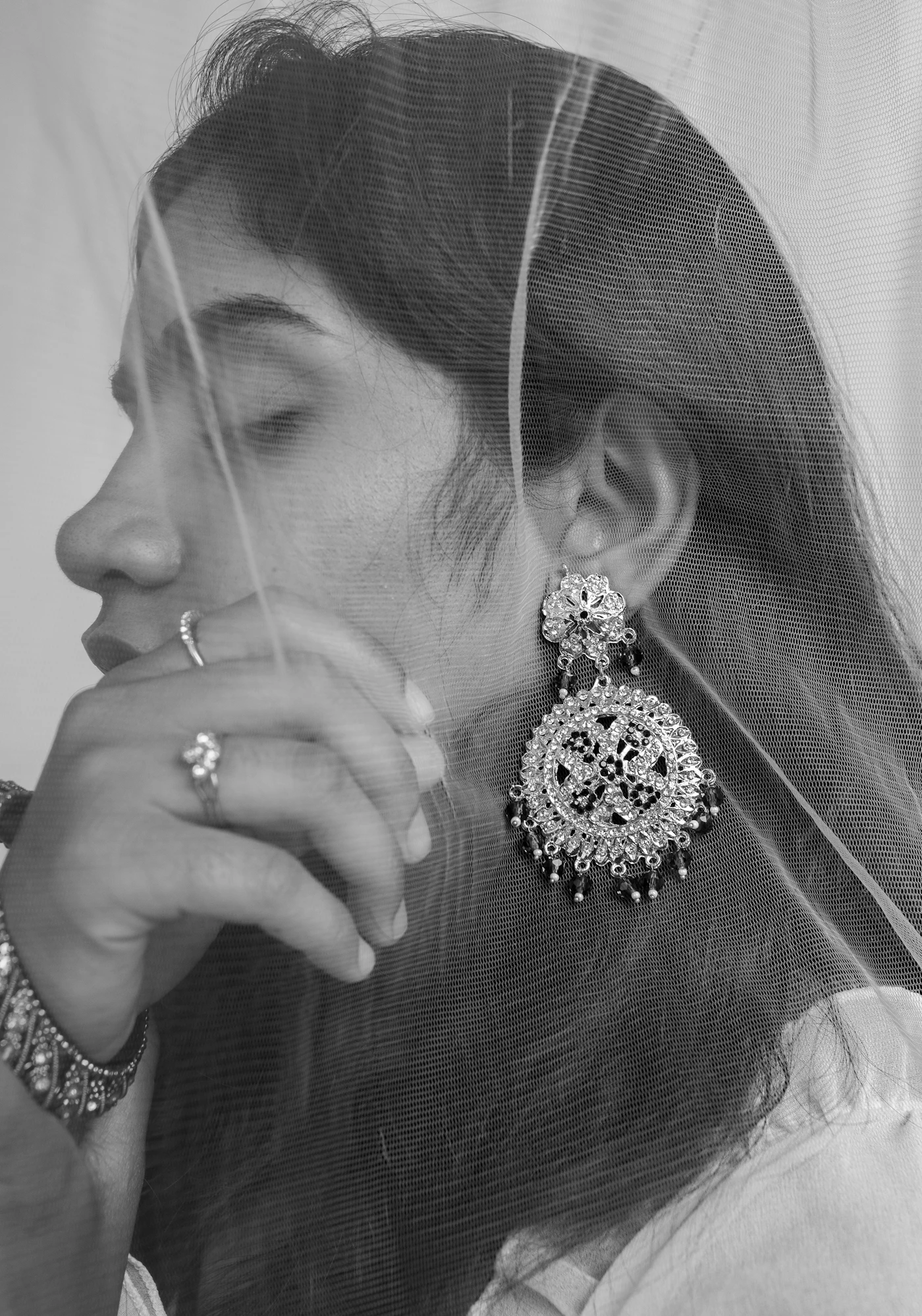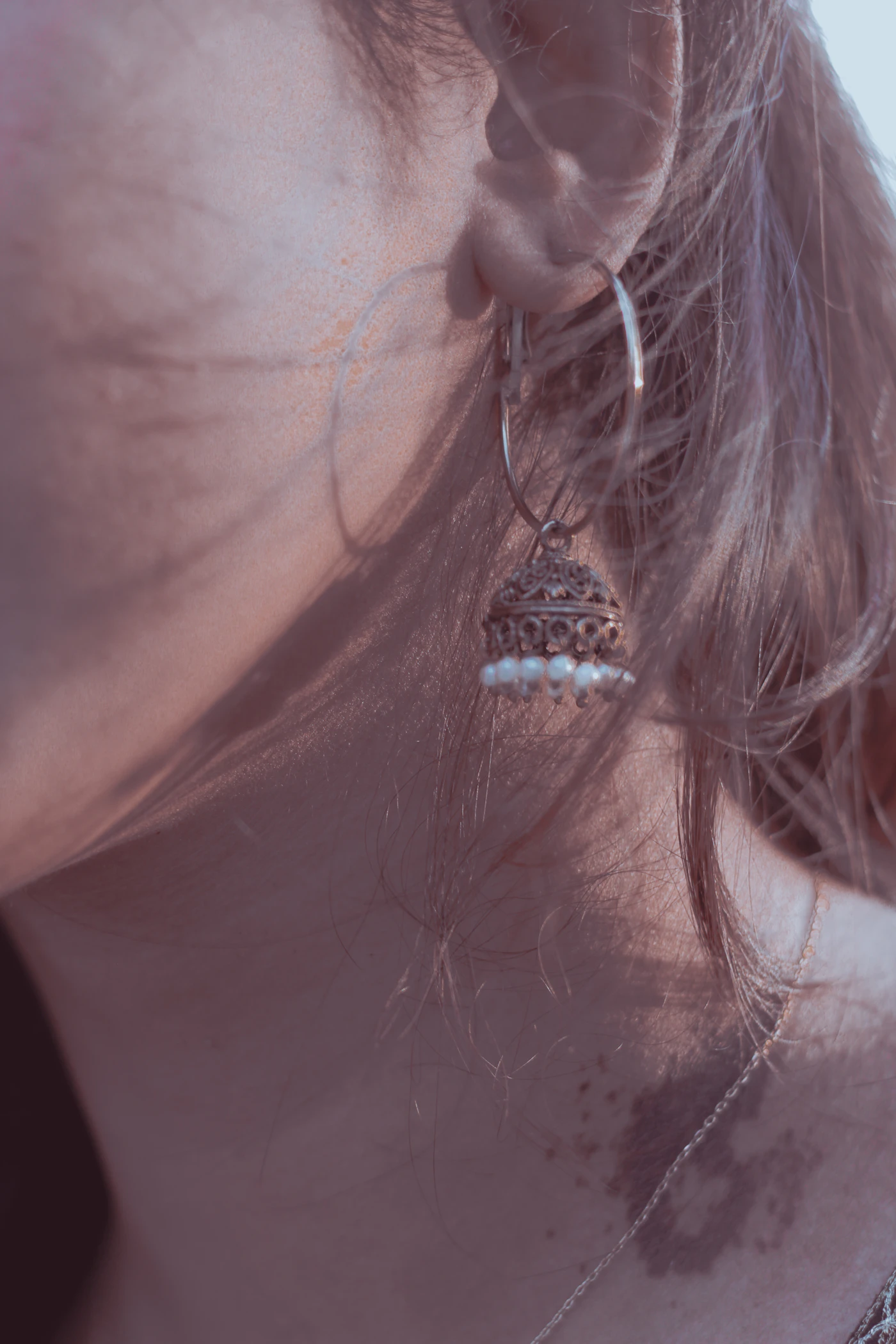
You have more than one established piercing and a tray of earrings that look lovely separately. Put them all on, however, and the arrangement can feel busy or physically crowded. A considered ear combination begins with spacing and hierarchy, not the greatest possible number of pieces.
This guide concerns styling jewellery in existing, healed piercings. Choosing jewellery for a new or irritated piercing is a different question best handled with an appropriate professional. For styling, start with what is already comfortable and add one piece at a time.
Choose the anchor earring
Select the piece you most want to notice first. It could be a hoop in the first lobe piercing, a distinctive stud, or a small drop. Give it priority before deciding what sits nearby. This creates a clear starting point and makes it easier to see whether another piece supports or competes with it.
An anchor does not have to be the largest item. A contrasting colour or unusual outline can attract attention even at a small scale. If several pieces all demand equal notice, try removing one and viewing the arrangement from a normal conversational distance.
Measure occupied space rather than counting piercings
The visible front of a stud may extend well beyond its piercing point, and hoops can lean or overlap as you move. Consider the actual area each piece occupies. Two small-looking earrings may fit poorly together if their wider edges meet, while a longer narrow shape may leave more space.
Photographs of another ear cannot establish the correct dimensions for yours. Use a comfortable existing piece as a reference and check product measurements. If a fit question remains unclear, ask the seller or seek an in-person assessment rather than relying on a styling photograph alone.
Connect the pieces through one detail
Repeat a curve, a finish, or a simple geometric idea to create continuity. You can mix colours while keeping the shapes related, or combine different shapes in a similar finish. Choosing one connection keeps the arrangement flexible and reduces the temptation to buy an entire matching collection.
Contrast works too, especially when one piece is clearly the focus. A smooth hoop beside a small textured stud can feel intentional because the difference is easy to read. The aim is not perfect uniformity but a combination that makes visual sense to you.
Assess the side view and the backs
A front-facing mirror view hides much of an earring's projection and fastening. Turn your head and inspect how the pieces sit from the side. Check whether backs or posts come close to one another and whether the jewellery meets glasses, headphones, or hair during ordinary movement.
Do not treat irritation as part of achieving a particular look. Remove an uncomfortable styling combination and seek appropriate advice if a piercing is sore or troublesome. A simpler arrangement that remains comfortable is more useful than a visually ambitious one you cannot wear happily.
Buy the missing relationship, not another isolated favourite
When something is missing, describe it precisely: a smaller rounded stud, a slimmer hoop, or a contrasting accent. This gives a new purchase a specific role. Without that step, it is easy to accumulate attractive pieces that all want to occupy the same position.
Use the merchants below to compare measurements, fastenings, material descriptions, and whether pieces are sold singly. Review return restrictions before opening packaging or trying items. If you enjoy asymmetry, you may only need one earring, but confirm the listing and choose the arrangement intentionally rather than discovering an incomplete pair after delivery.
Find your best fit
| Consider | Best for | The tradeoff |
|---|---|---|
| One hoop with a smaller stud | A clear, simple hierarchy | Dimensions still need individual checking |
| Related geometric studs | A compact repeated motif | Broad fronts may overlap |
| Asymmetric arrangements | A personal, less matched look | Requires checking each ear separately |
A more considered purchase
- Choose one anchor before adding pieces.
- Compare the space each design occupies.
- Check the side view and backs.
- Keep comfort ahead of a crowded arrangement.
Explore the possibilities
Use the criteria above to compare individual pieces. These links lead to retailer collections, not a tested product shortlist. Check current materials, measurements, availability and return terms before ordering.
Astrid & Miyu
Explore the collection and review sizing, closures and individual care instructions.
Mejuri
Explore the current jewellery collection and check material details on each listing.
Your questions, considered
Must both ears match?+
No. They can share a finish, shape, or level of detail without being identical. Assess each arrangement independently, since your piercing positions and preferred balance may differ.
Should I buy a complete curated-ear set?+
Only if the individual measurements and closures suit your existing piercings. A coordinated photograph does not guarantee a good fit, and separate pieces may offer a more precise solution.
How do I know when to stop adding?+
Pause when you can clearly see the main piece and the supporting details without physical crowding. If you keep adjusting the arrangement or cannot identify a focal point, remove one item and reassess.
The takeaway
A curated ear is an arrangement, not a quantity. Give each piece enough space, connect the shapes deliberately, and let a comfortable anchor guide future purchases.